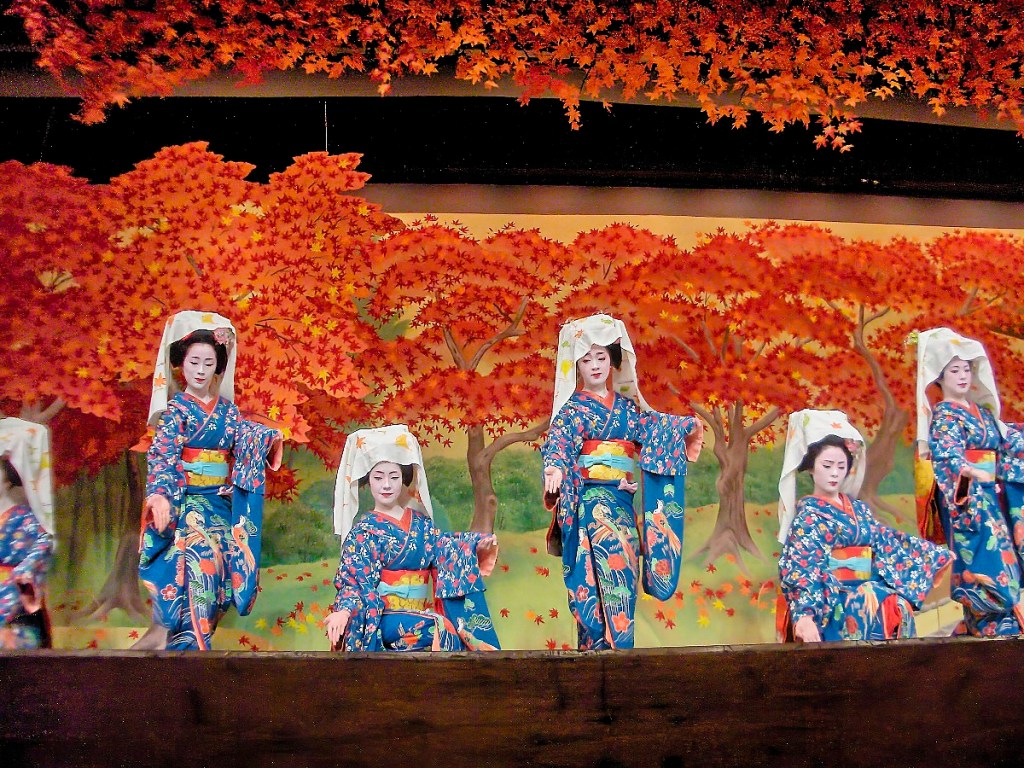
I attended two very different performances, on Saturday. The first was a traditional Noh play called Toru, and the second was the Geisha dance called Miyako Odori.
Unfortunately, there was some overlap in the performances. The Noh started at 1:30, and went to 5:00, and the Miyako Odori started at 4:50, but you should arrive 40 minutes early to attend a “tea ceremony” before the show. So, I had to leave the Noh play before it finished.
Noh
Some Japanese people have told me that “even Japanese do not understand Noh”, so I shouldn’t be worried if I can’t follow the play.
The show was actually made from a number of parts. First, someone explained what the play was about (in Japanese only, unfortunately). Then there was a short segment of three dances. A comedy play. Three more dances. And, finally, the Noh play itself.
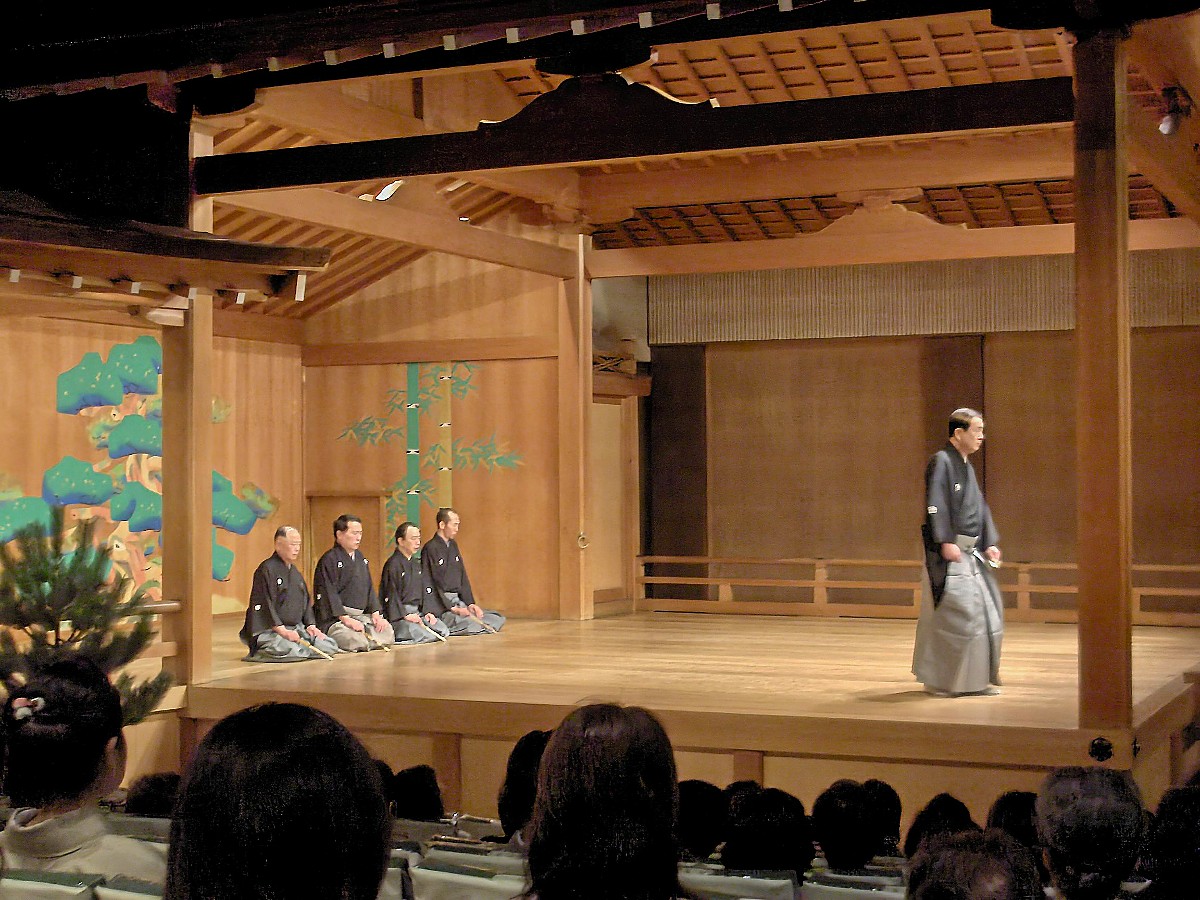
The dances were in a similar style to the Noh play. Four men, kneeling, chant. The dancer strikes some very precise poses, moving very smoothly between them, and also sometimes chants. It is not flamboyant, but mostly very slow and careful. He may also stomp his feet.
I was sitting beside a woman who spoke English quite well, and was also a Noh fan. She explained a little about what was happening.
The comedy was, again, something that I couldn’t follow, but it did get some good laughs from the audience. Two characters had a discussion and apparently one – a priest – spoke the names of a succession of fish. To Japanese speakers, it was quite witty.
I could only watch about 30 minutes of Toru before it was time to exit to head for the Geisha dance.
There were three musicians on stage, playing drums and a flute. They also chanted. A chorus of chanters was also present, but I left before they did anything. Finally, the characters give dialogue – in a chant -, as well.
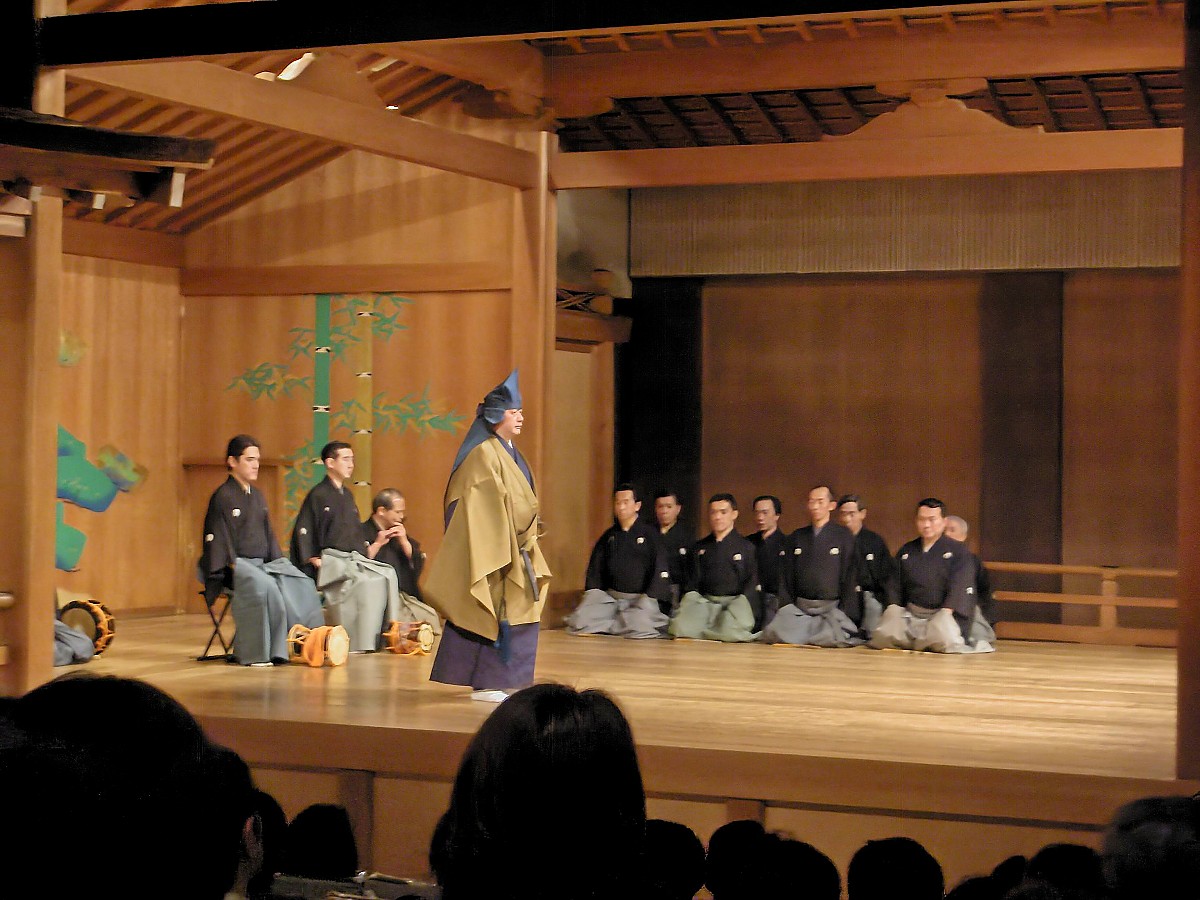
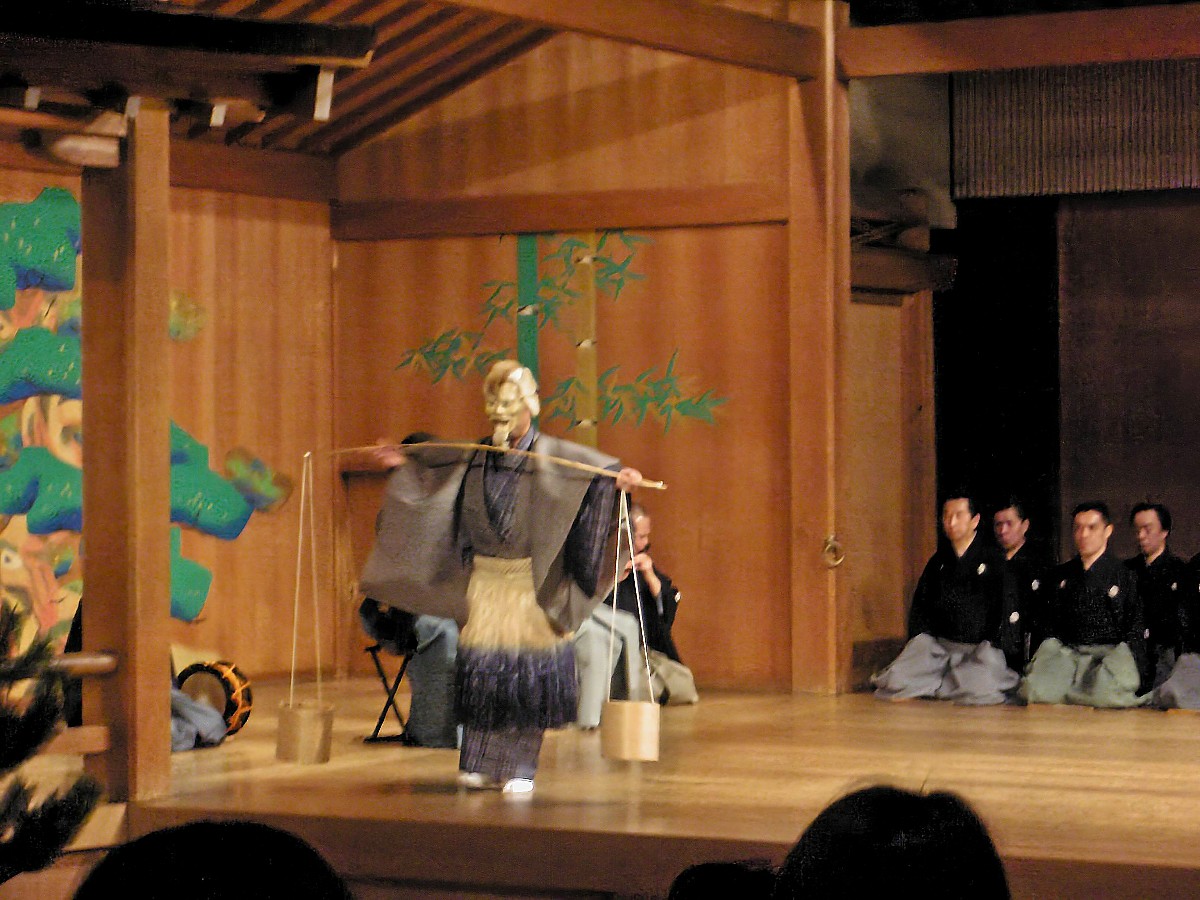
The woman beside me showed me a textbook she had on the play. It had all of the dialogue and a type of “musical notes” depicting the tone of the chanting. It also had diagrams depicting the stance of the characters while chanting – like a form of choreography. The style of Noh is that the characters stand in different poses, while they chant (or other performers chant) some dialogue. They seem to hold a pose for a number of minutes before it is time to move to the next. All of the poses present some symbolism.
When the performance started, I saw that many audience members had similar books. The theatre was almost full.
Miyako Odori
I rushed over to the Miyako Odori theatre, which was a 15 minute walk at a fast pace.
I suspected that the “tea ceremony” was not going to be a real tea ceremony, and I was correct. It was more of a mass tea serving, with a Geisha at the front pouring some tea that was served to a few guests. No one received a “personal” tea serving.
I could have seen another 20 minutes of the Noh play, and still had my quick cup of tea and sweet.
Compared to the very spare and formal Noh play, the Geisha dance was a lavish production. The costumes (mostly kimono) and sets were very colorful. It was obvious that the kimono were designed for a stage production, with large, bold patterns and bright colors. This is quite different from the intricate patterns that Geisha normally wear.
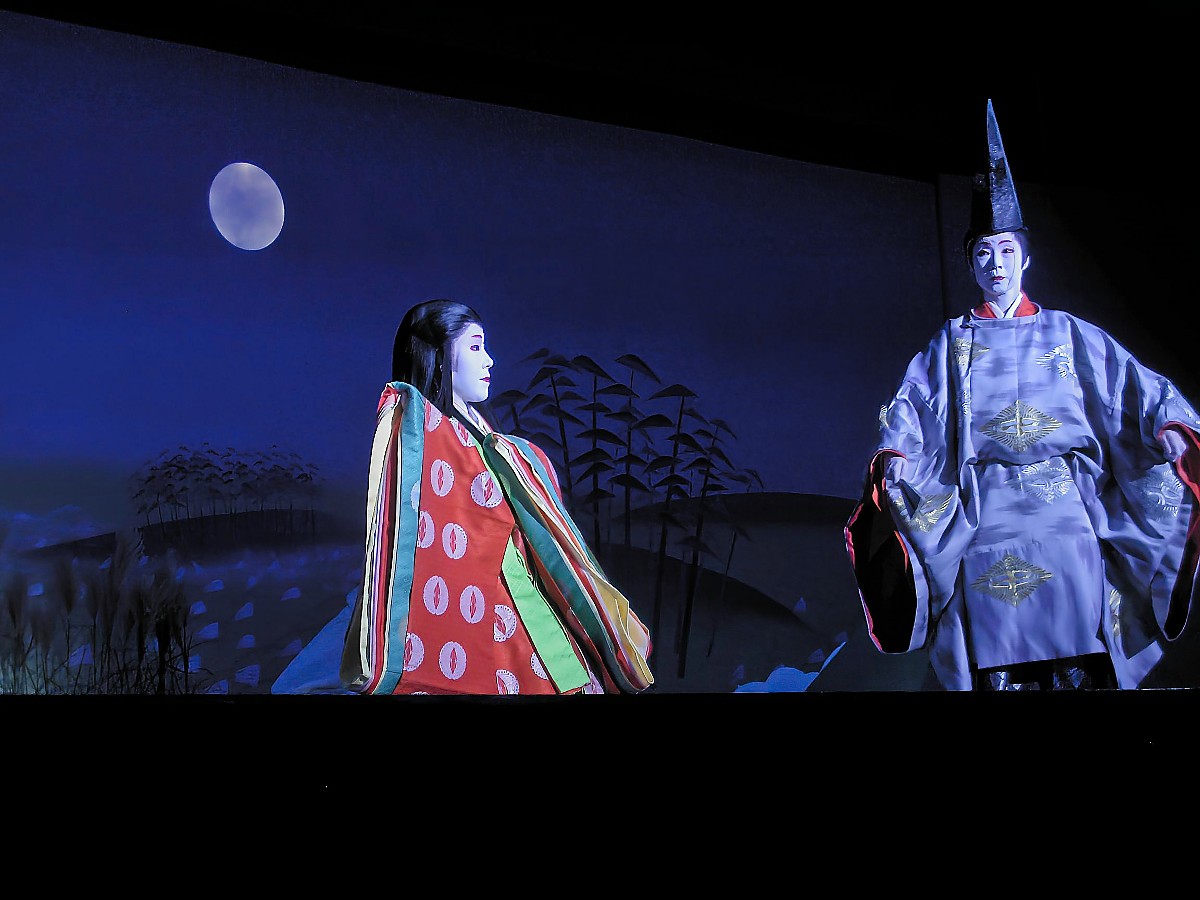
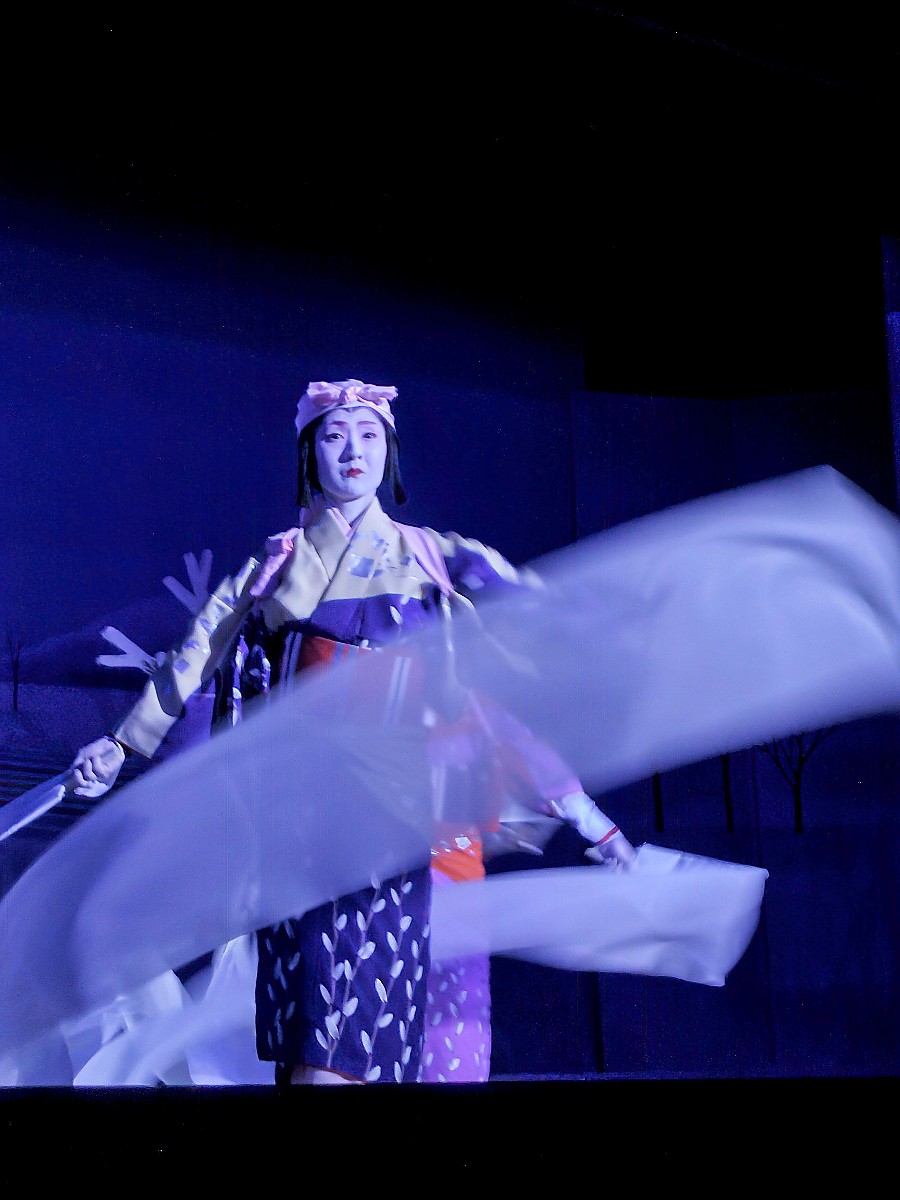
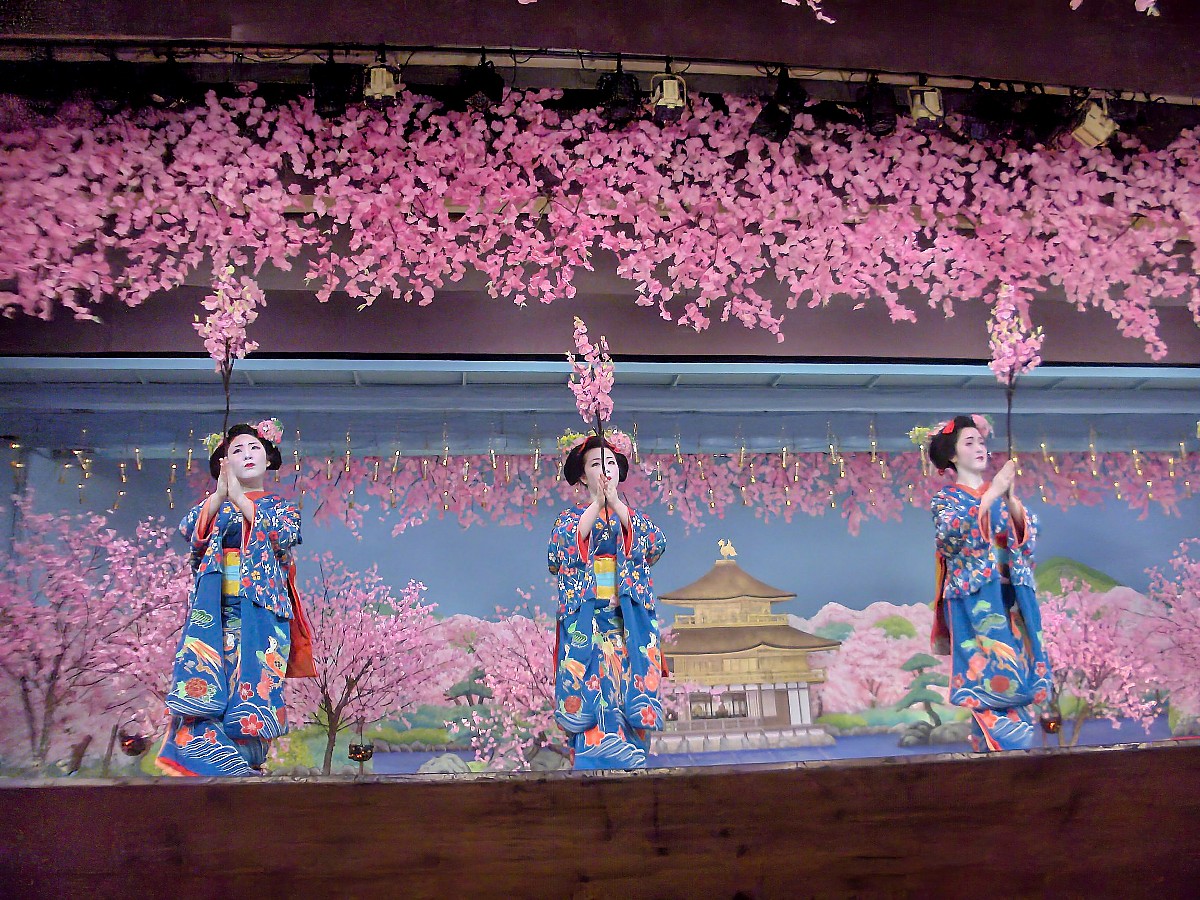
There were four sections – one for each season. Summer and winter appeared to be telling stories. Spring and Fall were dances. I couldn’t follow the stories, but it was enough to watch the performance.
All roles were played by women (which is opposite to Kabuki and Noh, where all players are men). There was also a group of women playing music, and another singing the songs. The actresses and dancers did not sing or speak.
Sitting in the front row, I was able to see the faces and expressions of the Geisha who were performing the stories. This was good, because a lot the storytelling appeared to rely on subtle expressions and head movements which would be lost to more distant viewers. I could see, from the precision of the movements, that the Geisha had a high degree of training and skill in performing the stories.
The experienced Geisha performed the demanding roles, and Maiko did side characters, and the group dances.
The Cherry Petals are Falling
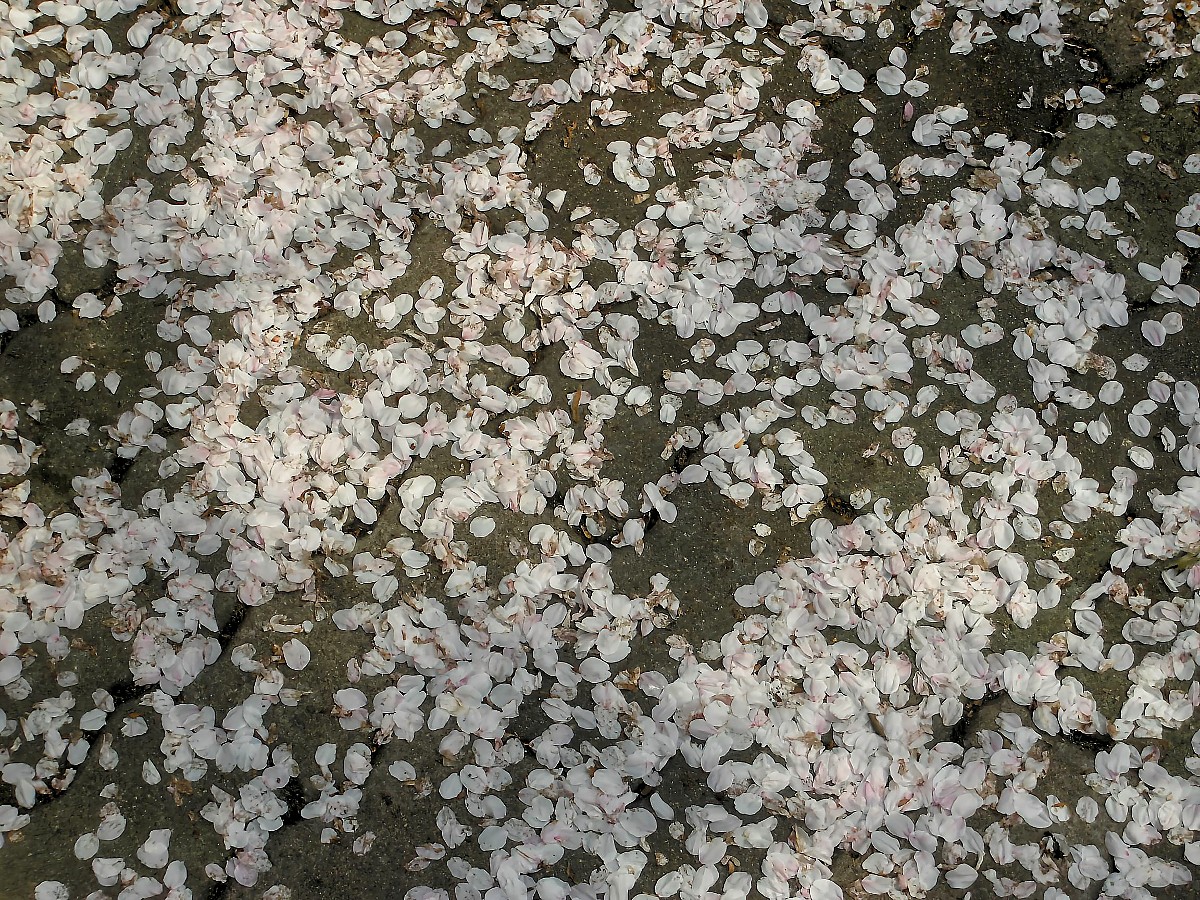
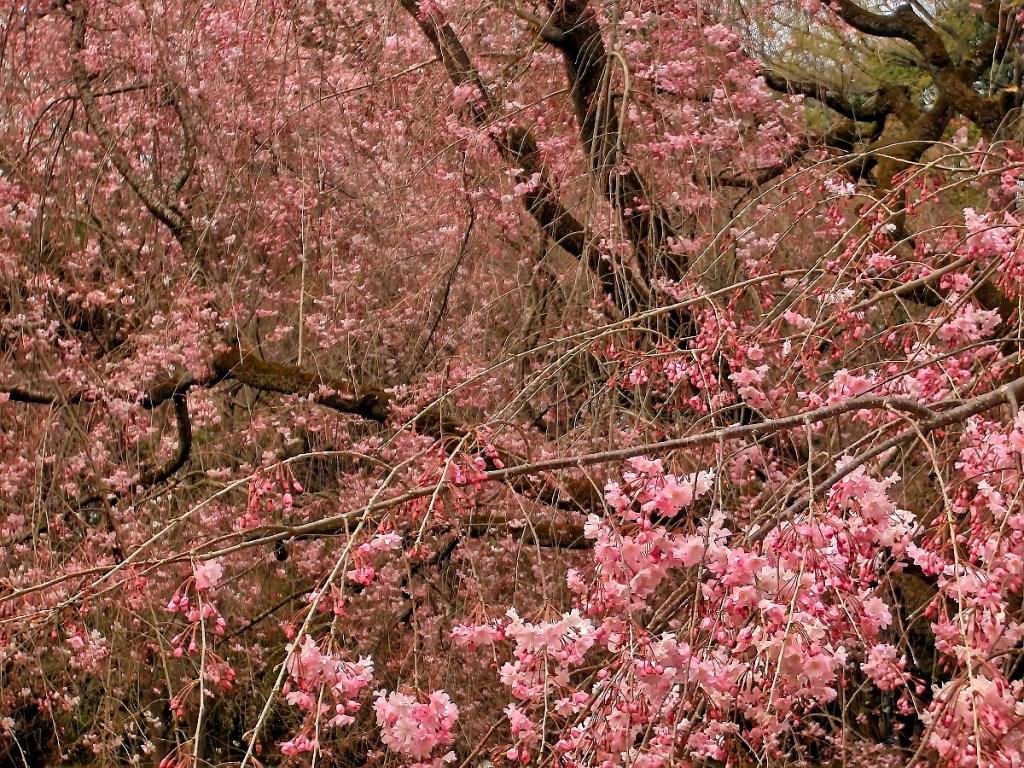
The cherry petals are starting to fall in Kyoto. Someone who came from Tokyo said they are mostly gone, there.
Then again, there are still plenty left:
 Michael Chmilar's Travels
You must be logged in to post a comment.