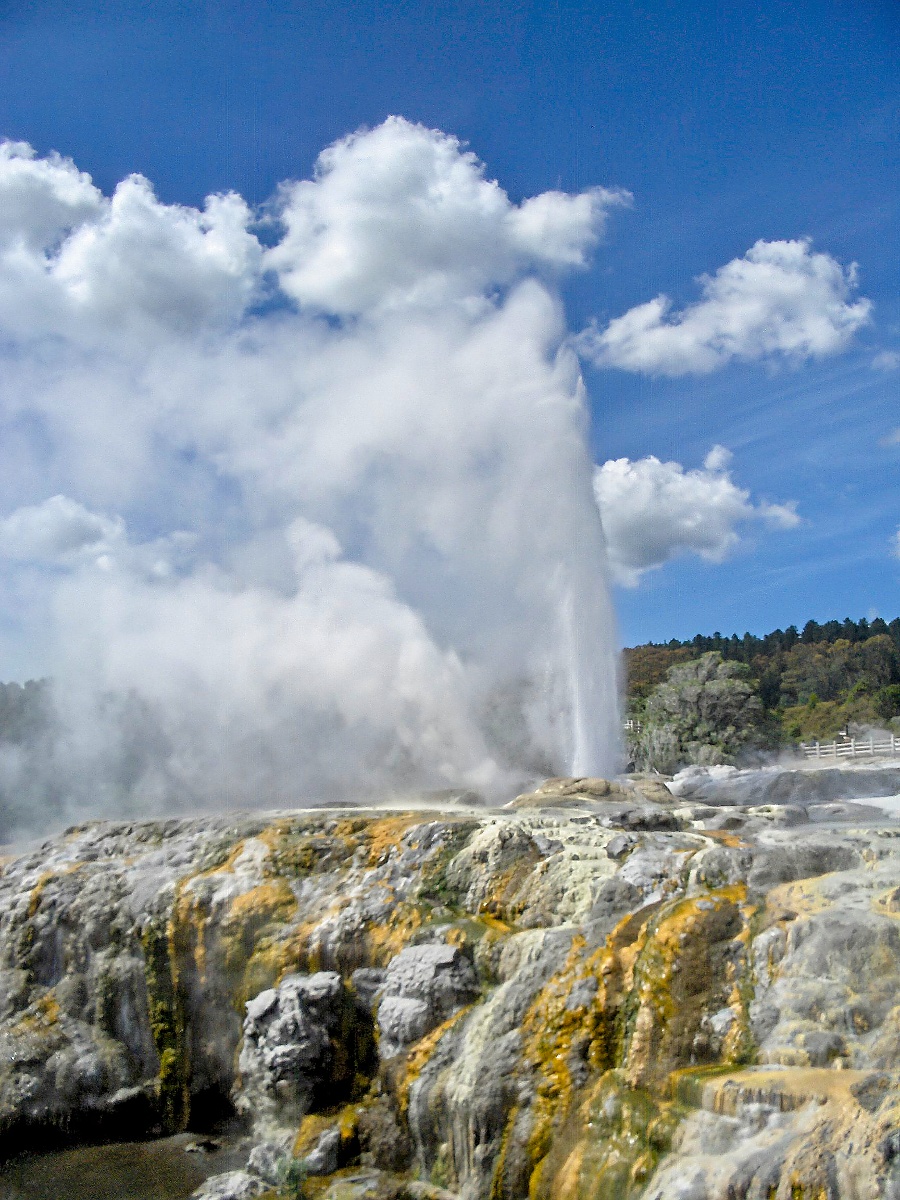
I’ve seen plenty of thermal pools and geysers, now. I also visited yet another rainforest area.
There are so many hot springs around Rotorua that the town park even has a bunch of hot pools, which you can see for free.
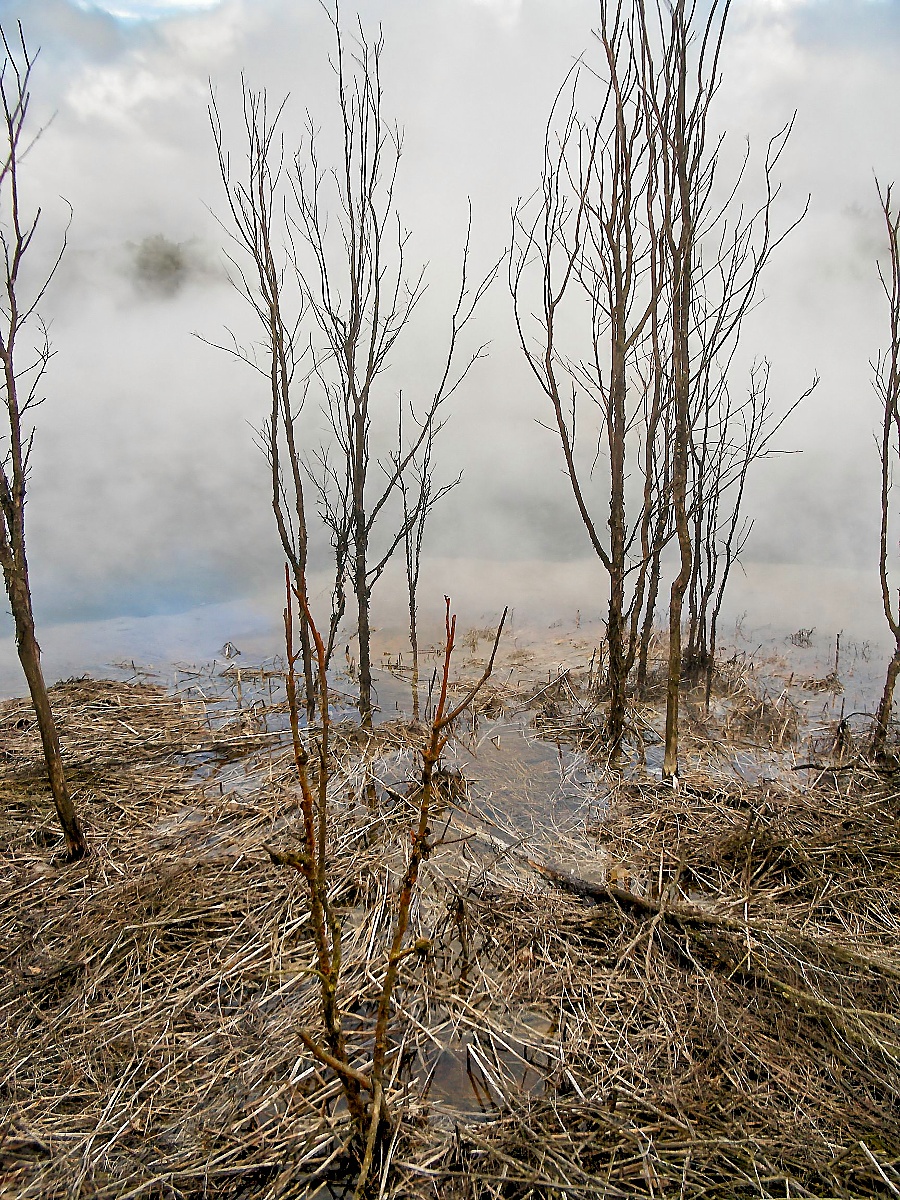
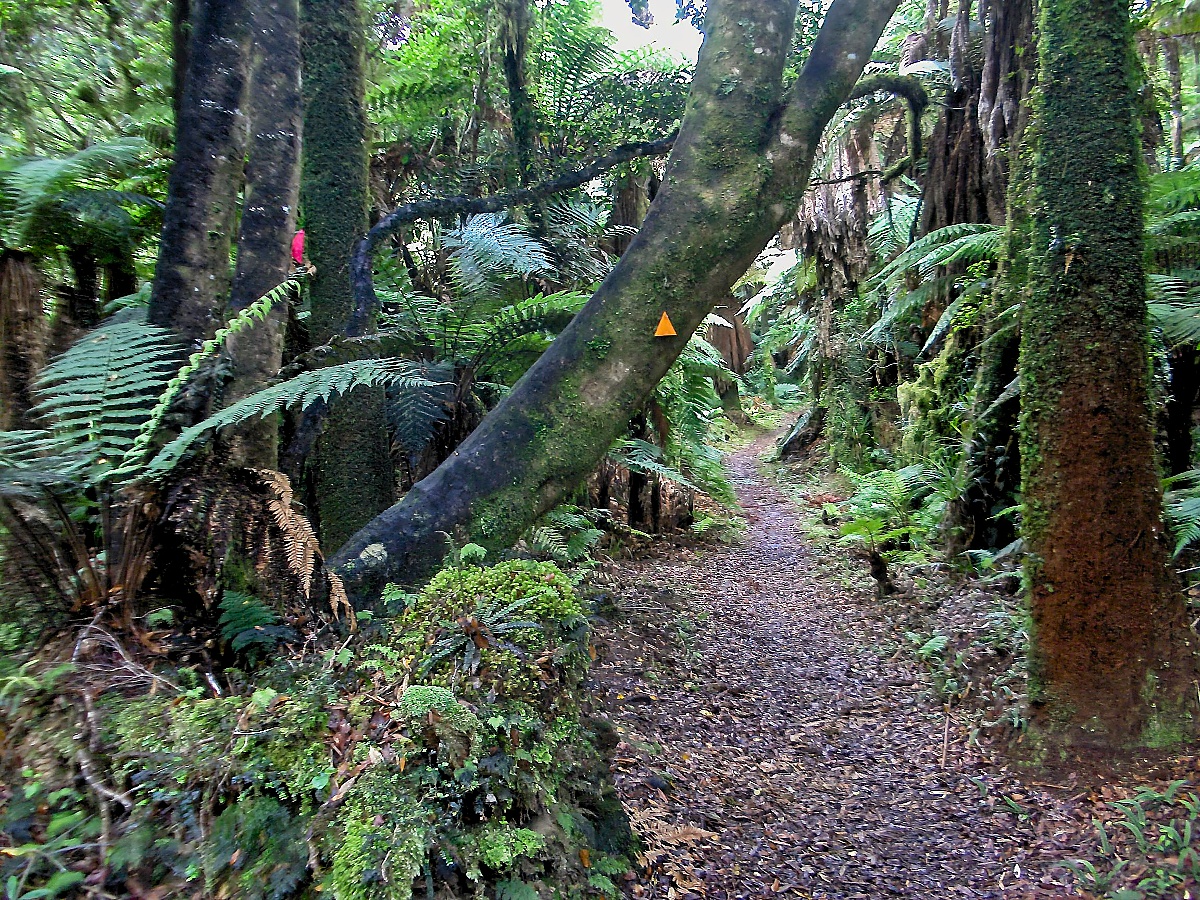
To the southeast, there is another rainforest area, which has a good collection of the really big trees. They grow up to heights of 50 or 60 metres, and 3 or 4 metres in diameter. Unfortunately, they grow very slowly, so, after a lot of the big trees were logged, faster growing, non-native trees have been planted for the commercial timber industry. No one wants to wait 700 years for a new tree to harvest! There is even a grove of California Coastal Redwoods, planted as an experiment to see how well they grow in NZ.
When hiking in rainforests, you see a lot of pink markers along the trail. The trail markers are orange. The pink markers indicate a poison trap line.
One of the non-native animals introduced by the British was the Opossum, to start a fur trade. Now, there are 70 to 90 million ‘possums, which eat 25,000 tonnes of foliage every day. They are destroying the rainforest, and outcompeting many native species for food. Poison is being used to try to control the population. You can also buy garments with the tradename “possumerino”, which is a wool/possum fur blend.
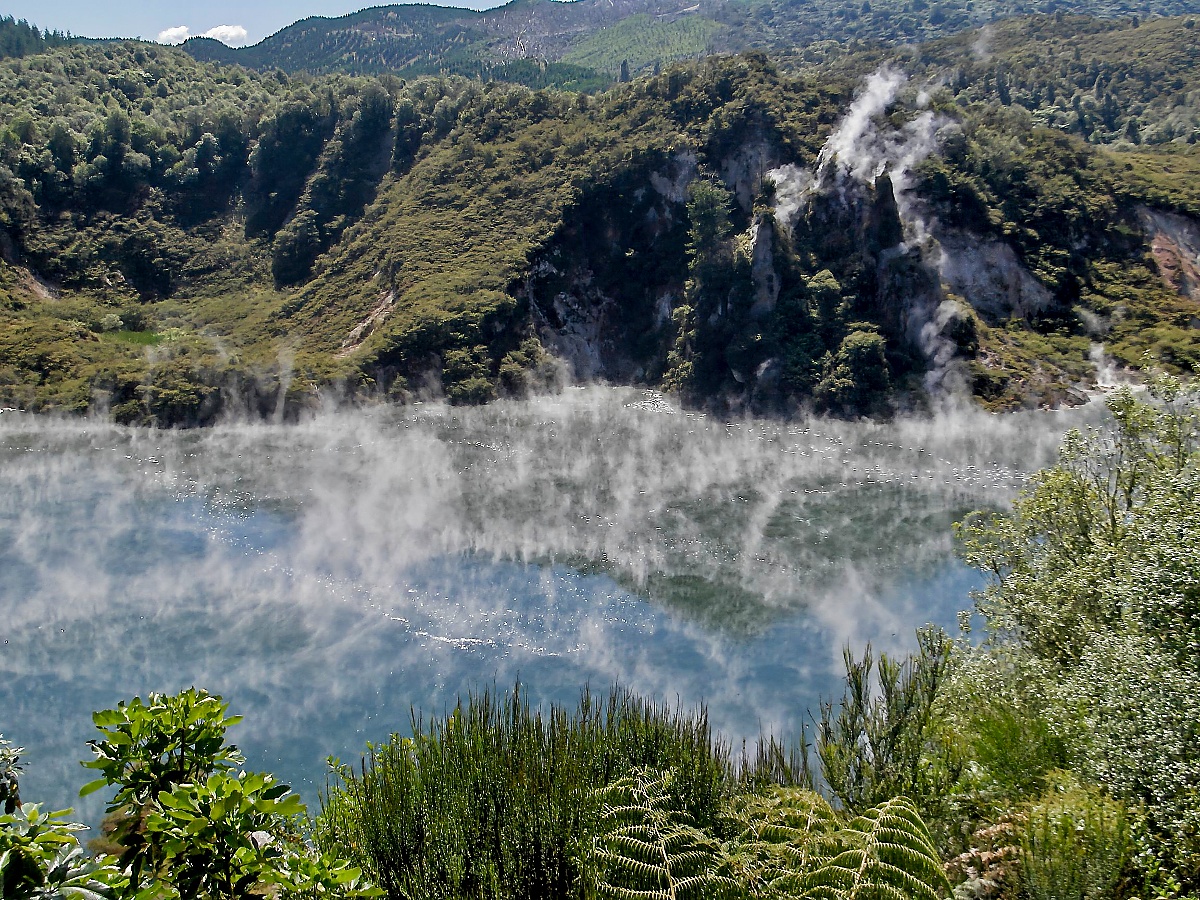
One thermal area used to have the world’s largest geyser. About 100 years ago, the Waimangu Geyser could erupt over 400 metres (that’s more than 1300 feet)! It lasted for about 4 years, erupting every 36 to 72 hours, and blasting out water, rock, and black sand. Then it became very infrequent, and eventually died.
The same thermal area still has the world’s largest thermal lake: Frying Pan Lake.
In Rotorua, there is another thermal area (admission $35), which has NZ’s largest active geyser: Pohutu. It is a mere 15 to 30 metres, but it erupts about 20 times per day.
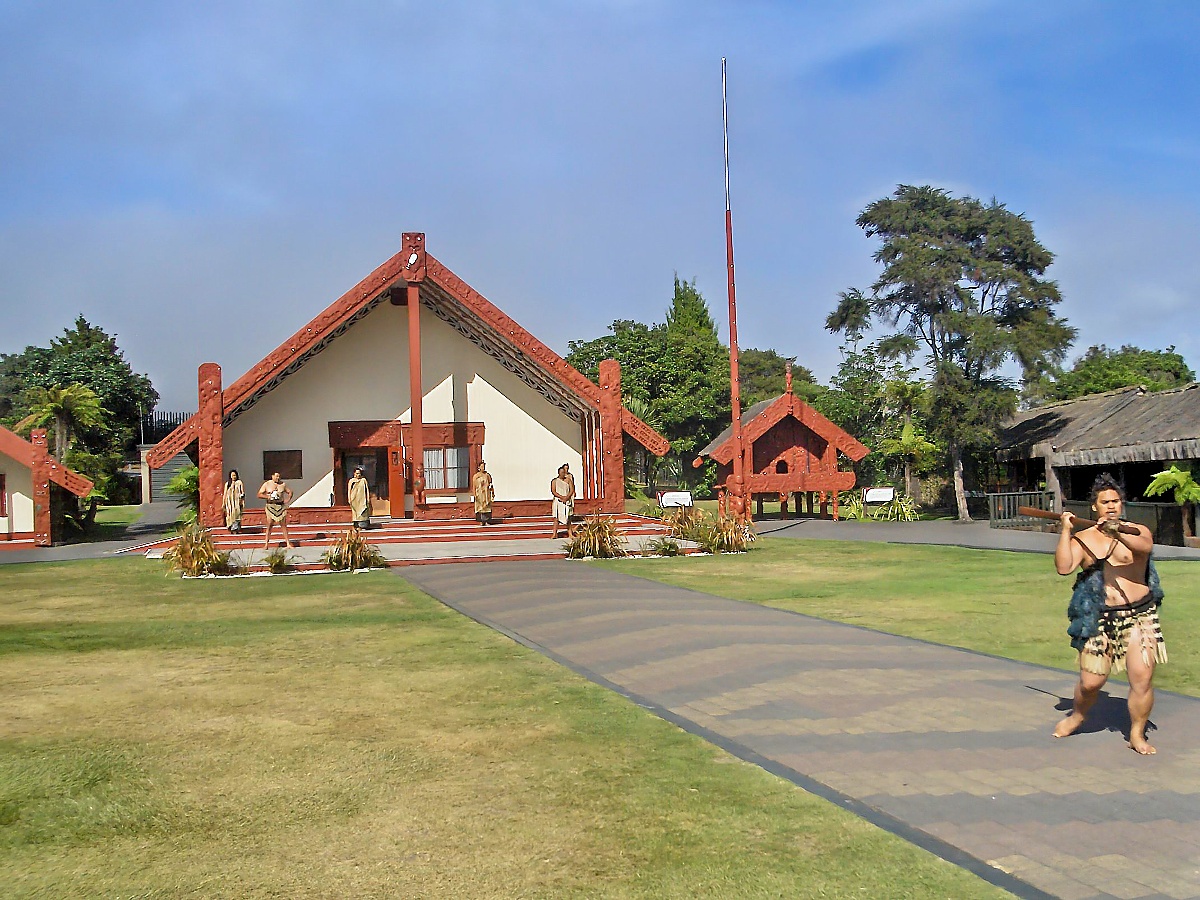
Of more interest in the Pohutu area is the Maori Cultural Show. It is included in the admission price. The tourists are invited into the Marae, and then songs and a war chant are performed. It is a good opportunity to learn something about Maori culture.
I have one week left with the campervan, but I am running out of things to do! The only thing I really want to see is White Island, which is an active volcano that has lava flows. Other wise, I’ve seen lots of thermals, rainforest, and volcanoes! There are some beach areas, but beaches don’t hold much interest for me.
 Michael Chmilar's Travels
You must be logged in to post a comment.