
I got into Xi’an around a couple of days ago, after spending two nights on Hua Shan (Mt. Hua), and one night in the town below, before going up.
Hua Shan is another one of those impossible-looking steep-sided mountains that become Buddhist holy mountains. Fortunately, there is a shuttle bus and cable car that take you up over 1200m of the trip up the mountain. After that, you still have to climb over 500m to get to the highest two of the five peaks.
I wanted to stay in the hotel on East Peak, which means that I had to haul all of my stuff up to second-highest peak. Naturally, I opted to take the cable car.
The trip from Chengdu to Hua Shan was uneventful. I got a “soft sleeper” on the train. The trip took 20 hours, but half of that was spent sleeping. I arrived in the town at the foot of Hua Shan around 6:00pm. A taxi driver took me to a hotel which was crappy and too expensive. The only merit it had was that the walk to shuttle bus was 50m.
The next morning, I journeyed up the mountain. Even with the cable car, it was still quite a haul. It took me a couple of hours, with frequent rest breaks, to reach the East Peak Hotel.
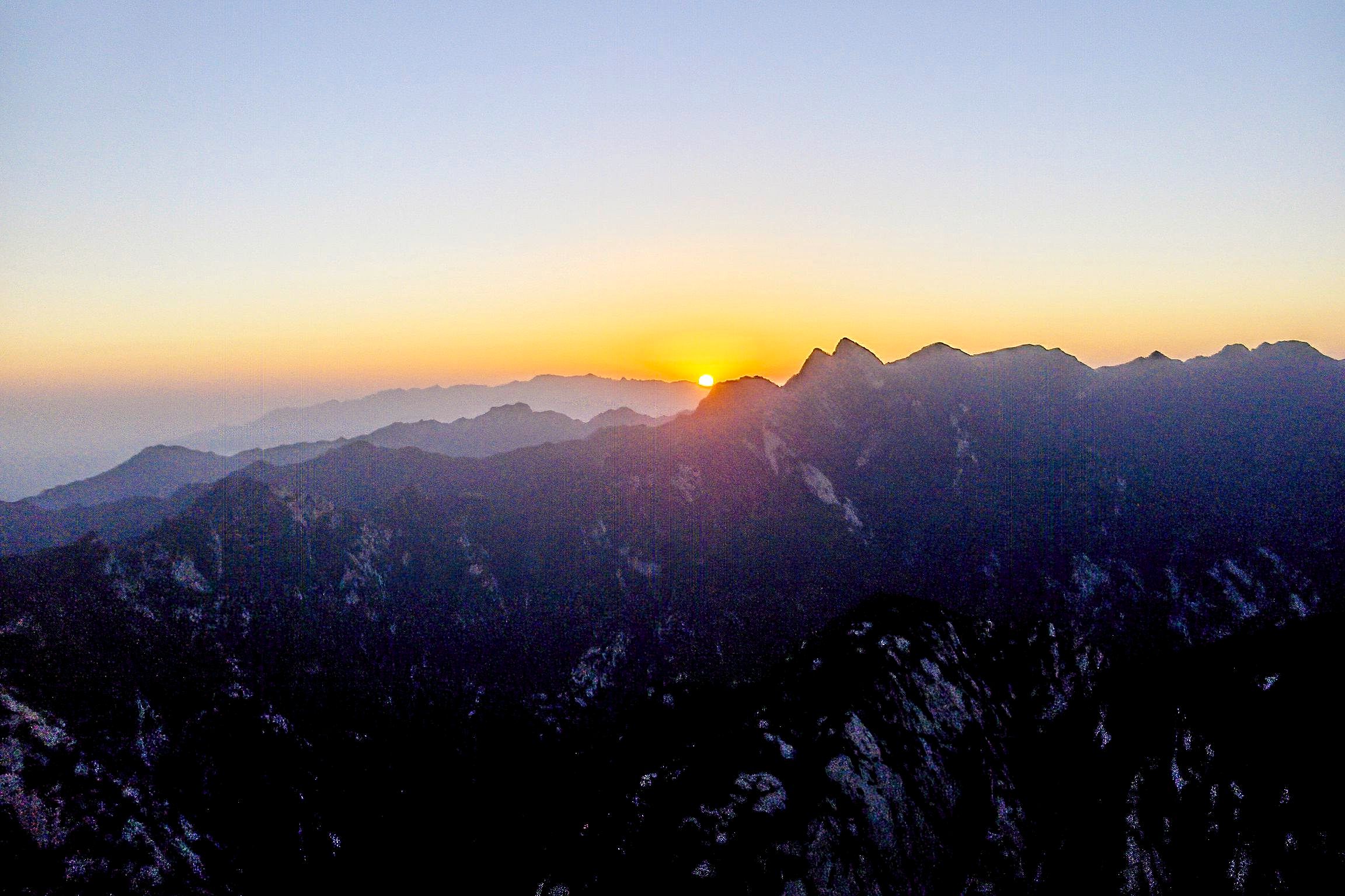
The East Peak is the most desirable peak to stay at, so you can see the sunrise in the morning. It only cost Y80 to stay in the dorm room for each night. There is only an outhouse, no sink or shower. There is a thermos of hot water, and a restaurant (which had the only English-language menu I’ve seen that listed a dish containing “dog meat”).
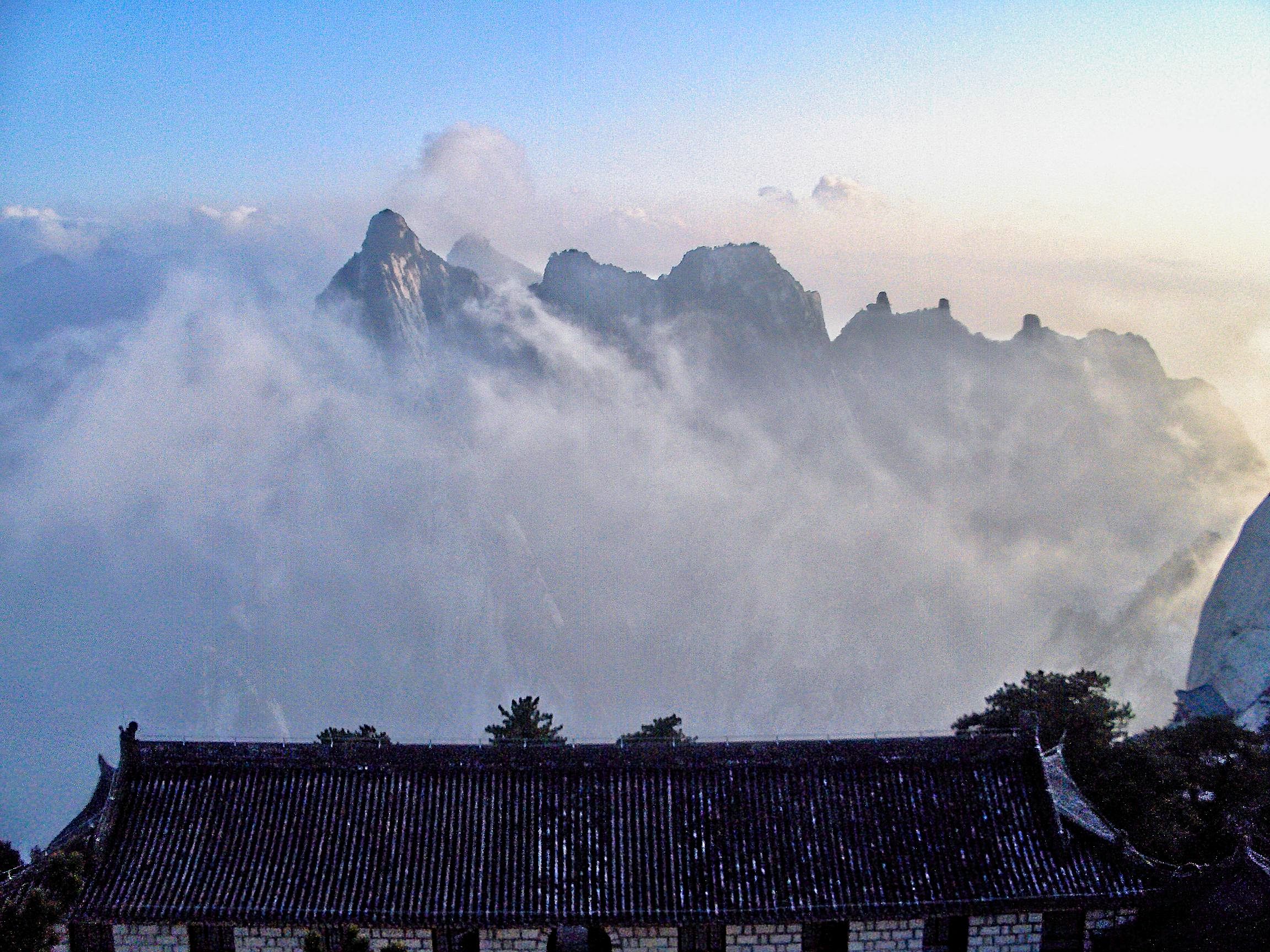
The first night, I shared the ten-bed dorm room with two French people, and two Belgians. They all spoke English well, and were a good-natured and ageeable group. The second night, I was with a pair of Australians who were overly fussy about the water in the thermos, and insisted on putting chlorine tablets into it. (They had both been sick multiple times in South America from the water, where they had been last on their “around the world” ticket.)
On the first day, the sunrise was unspectacular. It was overcast, so the sun was not visible. The second morning was clear.
On the mountain, you are usually only a ten-minute walk from a vendor of food, drinks, and tourist crap. All of this stuff is hauled up the mountain by porters who do not use the cable car – they haul it up from the bottom. Naturally, the prices are inflated (ie. Y10 for a bowl of instant noodles, instead of Y3.5.
The first dinner, we all ate instant noodles because the other foreigners thought the restaurant was too expensive. The second night, the Aussies had brought their own instant noodles up, so I decided to try the restaurant myself. With a little investigation, I discovered that I could get a bowl of fresh noodles with tomato and egg for Y18, and a beer for Y15. For Y33 I had a much better dinner than the night before, which cost Y26 for instant noodles, two packaged sausages (small), and a package of biscuits.
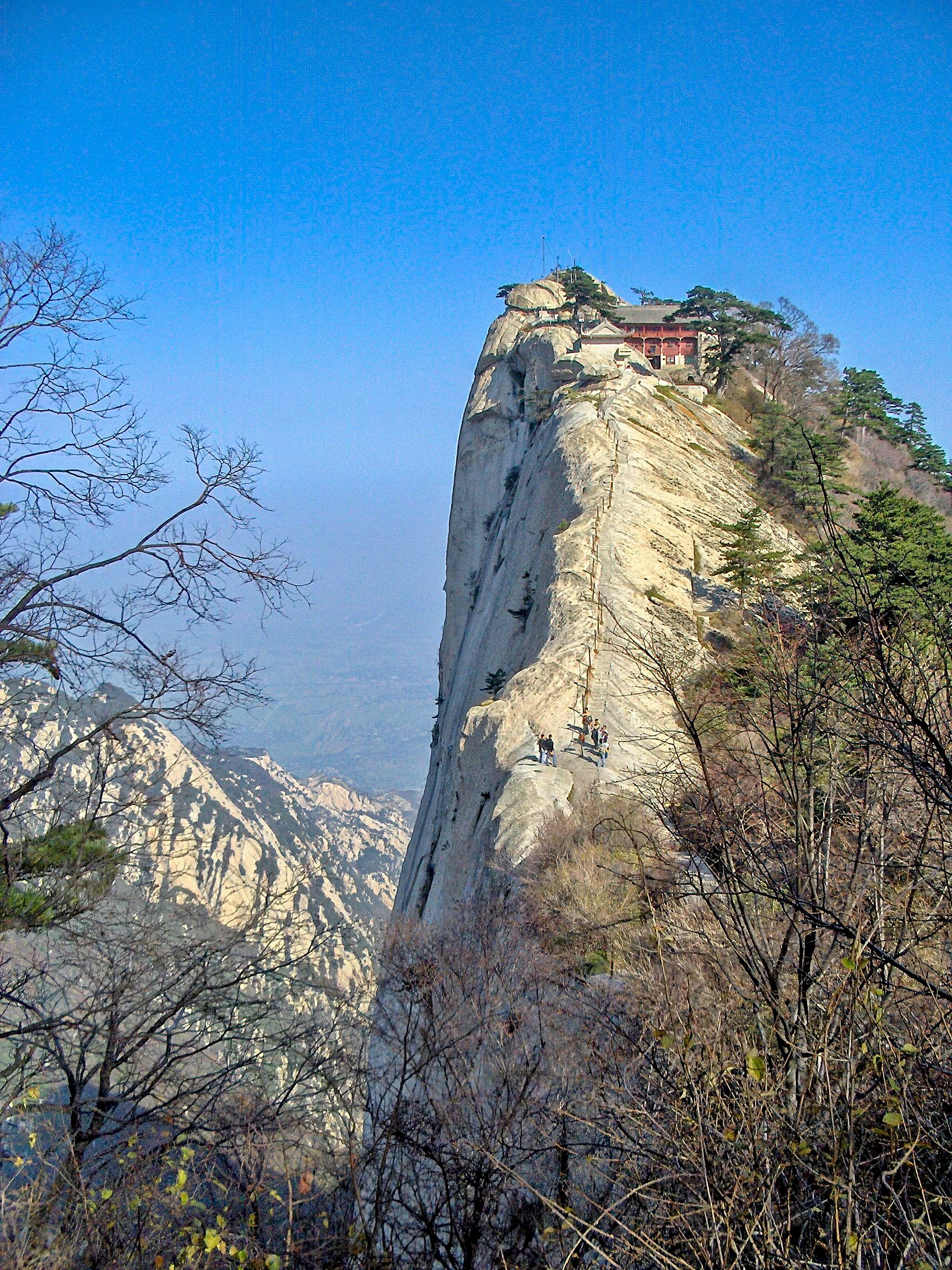
The trails on Hua Shan are all stone pathways, which are easy to walk on. Some of the stone stairways are very steep, and, in a couple of places, it is more like climbing a ladder. (There are chains along the sides on the really steep parts.
You can still see traces of older pathways, which are much more primitive than the current “superhighway” path. The old path has small divots in the stone for toe and finger holds. I can imagine that many monks died climbing Hua Shan in the old days.
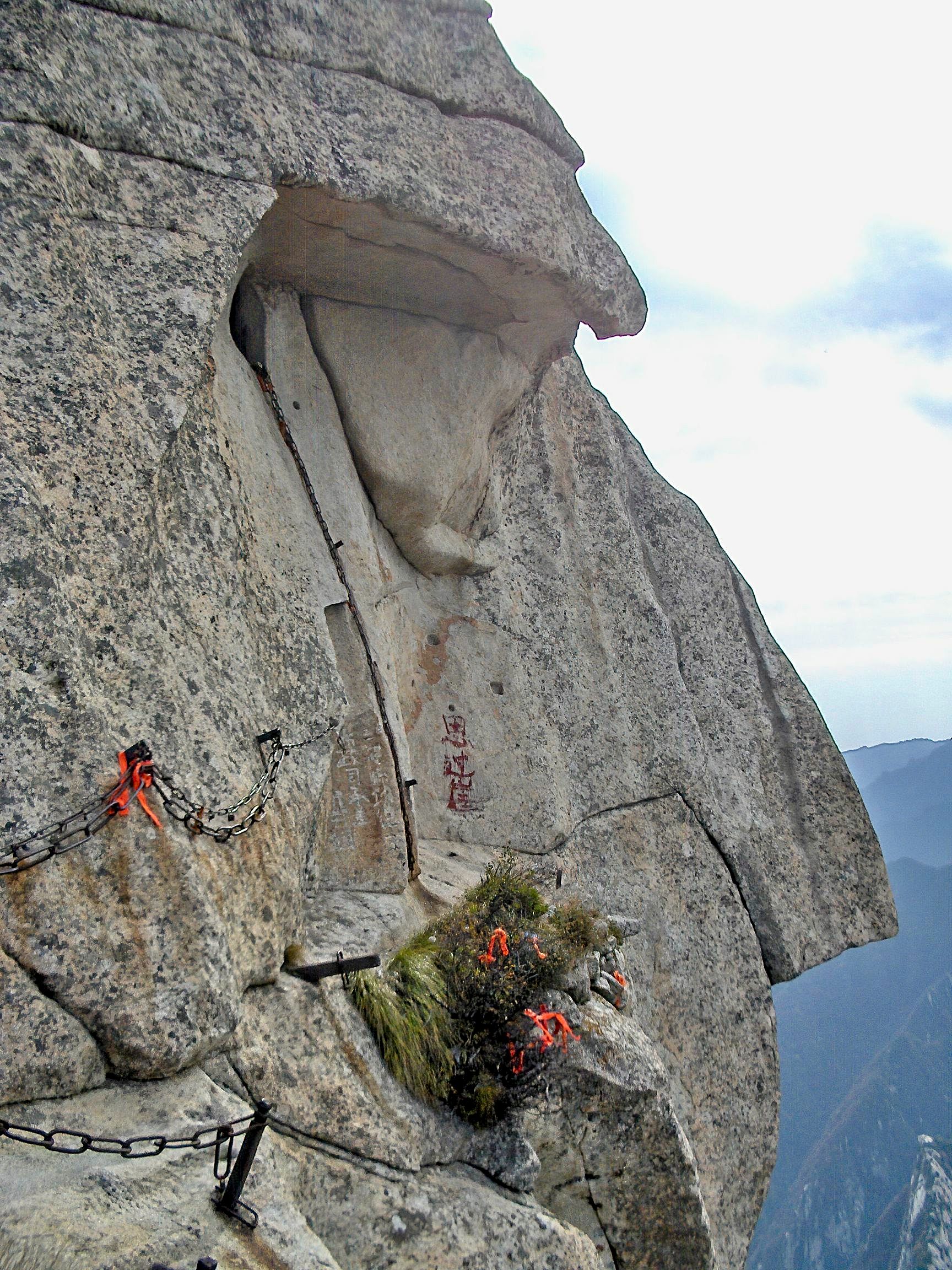
Pictured below is a monk’s cubbyhole just below the South Peak. Chains have been installed for access, but it is actually closed for public access, now. I you slip, you will fall over 800m down a cliff.
When I was in Jiuzhaigou and Siguniangshan, most of the Chinese tourists were wearing reasonable casual or outdoor clothing, and wearing either athletic shoes or some sort of technical footwear, a big change from four years ago, when a lot of tourists wore suits and dress shoes. This gave me the impression that the tourists are getting wiser about visiting the outdoors.
Well, at Hua Shan, the middle-aged men show up in suits and dress shoes. The vendors on the mountain make a killing selling cheap sneakers to them, once the tourists see the steep stone stairways they have to climb! Most of the men, farther up the mountain, are sporting new bright, bright white sneakers with their suits.
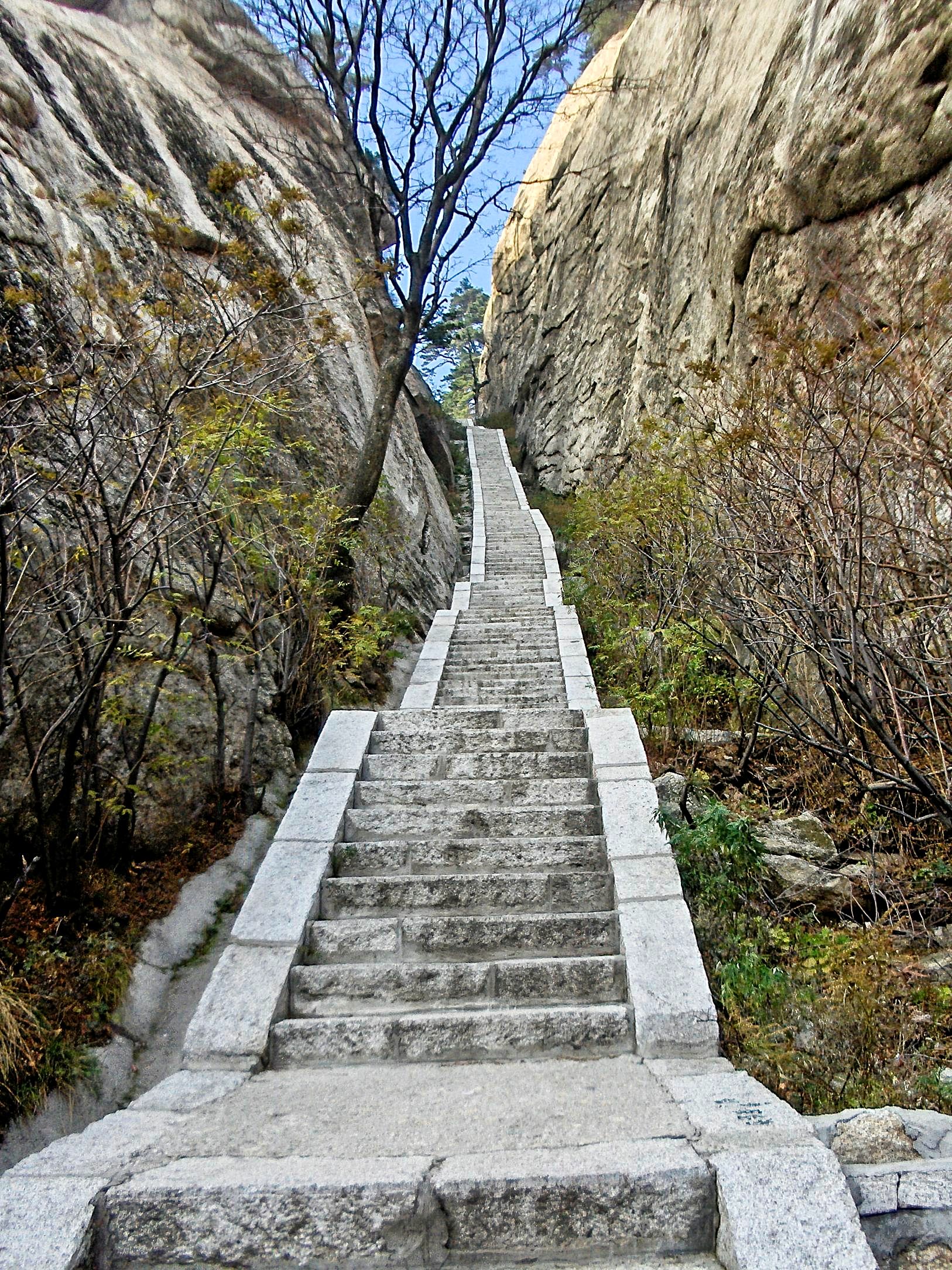
Leaving Hua Shan went smoothly, except for one problem: If you buy the “return ticket” for the cable car and bus, it is only good for the same day, or the next day. I had spent two nights on the mountain, so my tickets were no longer valid. The cable car ticket taker eventually just let me through, after talking for a few minutes on his walkie-talkie. The bus conductor insisted that I purchase a new ticket. It was only Y10 ($1.25), but I still complained mightily about my lost Y10 on the return ticket.
After that, though, a driver in the shuttle parking lot drove me to “bus to Xi’an” for Y5, which I thought was reasonable. He drove to the main street, caught up to a bus to Xi’an, and flagged it down. My pack was moved to the bus’ storage, I hopped on, paid Y30 for the two hour ride, and was in Xi’an by noon.
 Michael Chmilar's Travels
You must be logged in to post a comment.