
I spent three days in Rilong Town, which is the town outside the Siguniang Shan area. (Siguniang = Four Sisters, Shan = Mountain).
Mt. Siguniang is 6250m tall (20,505 ft), and is the second tallest in Sichuan province.
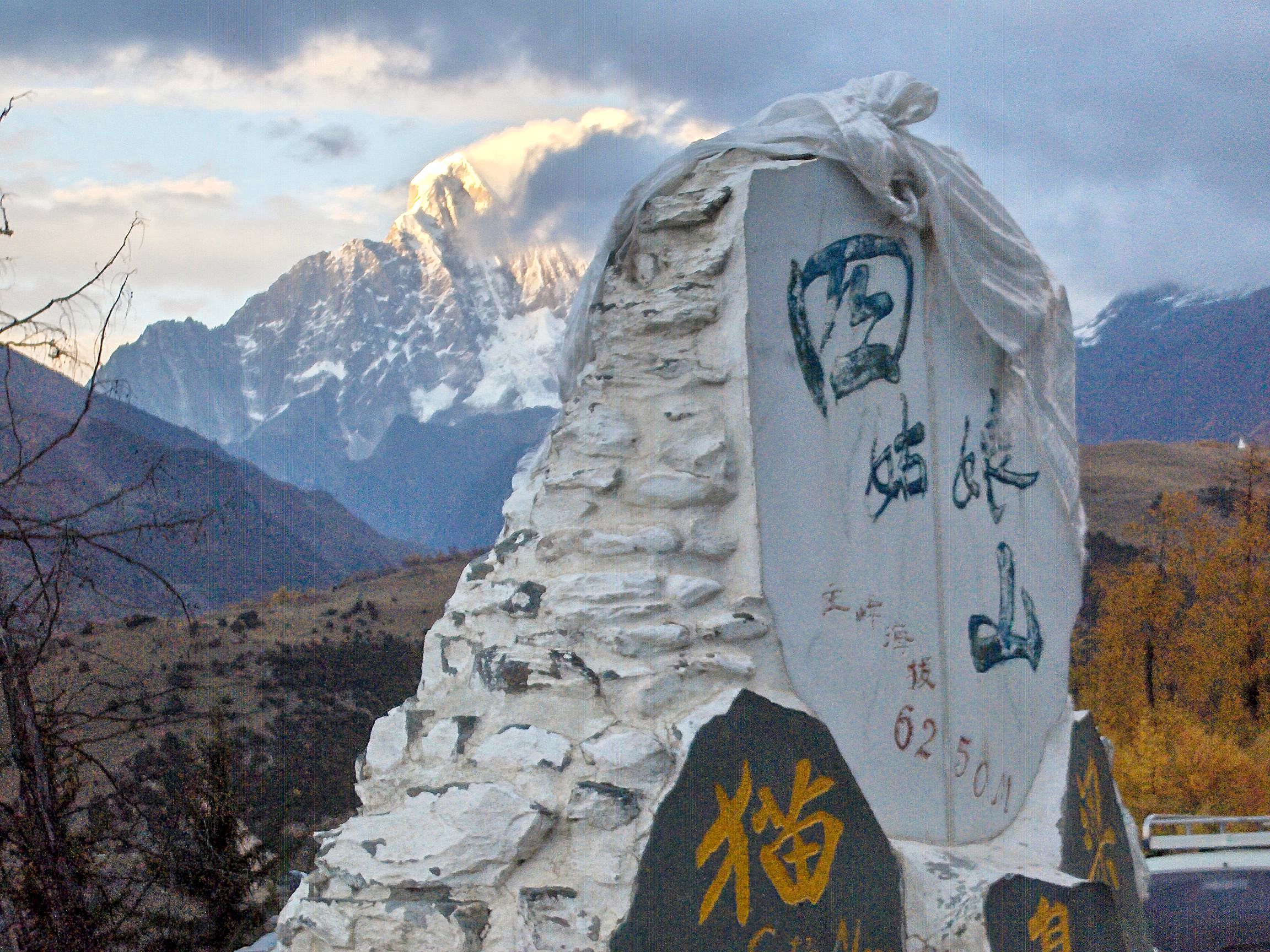
The route to Siguniang from Chengdu goes over the 4487m (14,721ft) Balang Pass. This is higher than the summit of Mt. Whitney. You can’t take a bus to the top of Whitney!


The trip to Siguniang was semi-successful. Two things hampered the success, and I did not accomplish all of the things I had hoped to do in the area.
The first problem is that not many foreign visitors go to Siguniang, so there were plenty of communication problems. It was difficult to explain what I wanted, and to get information from the locals.
The second, and larger problem, is that I suffered my first bout of “digestive distress” on the second day. More on this later.
Anyway, I arrived around 3:30 in the afternoon. The bus stopped in front of a hotel, and immediately the hotel staff were upon me to take a room in their establishment. It was only Y80 ($10) per night for a private room with shower and toilet, which seemed fairly cheap. I did notice later that cleanliness was not a high priority in this hotel, so I wouldn’t recommend it. There is probably a better place in Rilong Town.
After getting the room, the staff were on me about “Shi ma”, which means “ride horse?” It seemed rather late to embark on a horse ride, since it was almost 4:00pm. However, I was assured that it was plenty of time. So, off we went.

It was about 4:30 by the time I was on the horse, climbing up the side of the valley.
The horses are very small, and saddles seem to be designed for small people, too. The stirrups are very high, so my knees were very, very sore by the time we reached the top. The horse riding consists of: you sit on the horse, and it walks along, with the owner (who walks alongside) occasionally grabbing the reins if the horse is going astray. The horse has followed the same track countless times, so it knows the way. However, it is eager to just wander into a pasture and stop, if it is allowed to.
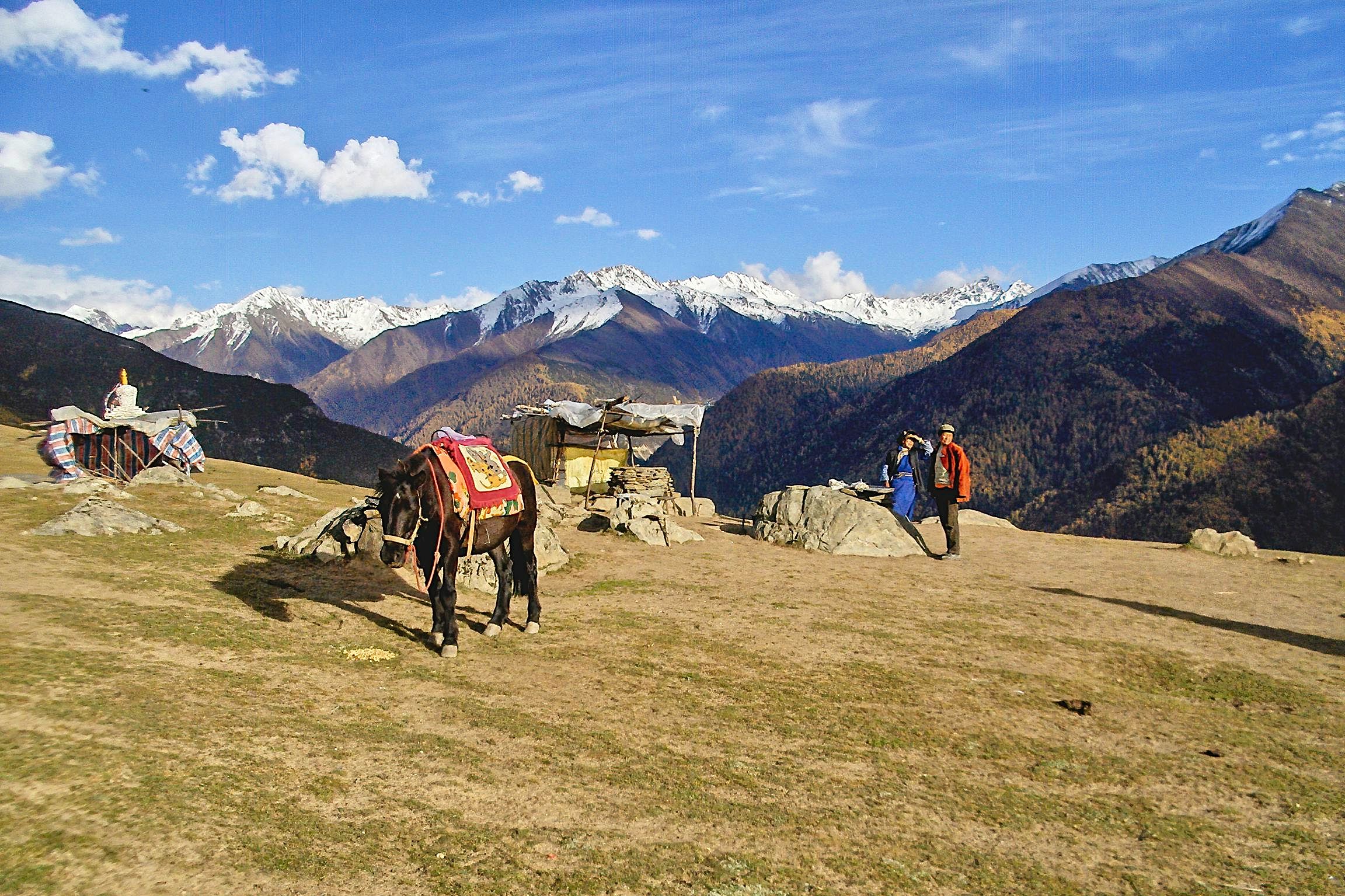
The main problem I had with the horse riding, however, is that the Chinese people do not appear to treat the horses very well. The main training method is punishment, and the only reward is food. There is no affection given to the horse, and no sense of bonding.
I almost felt like I should walk down the trail, because I felt sorry for the poor horse.
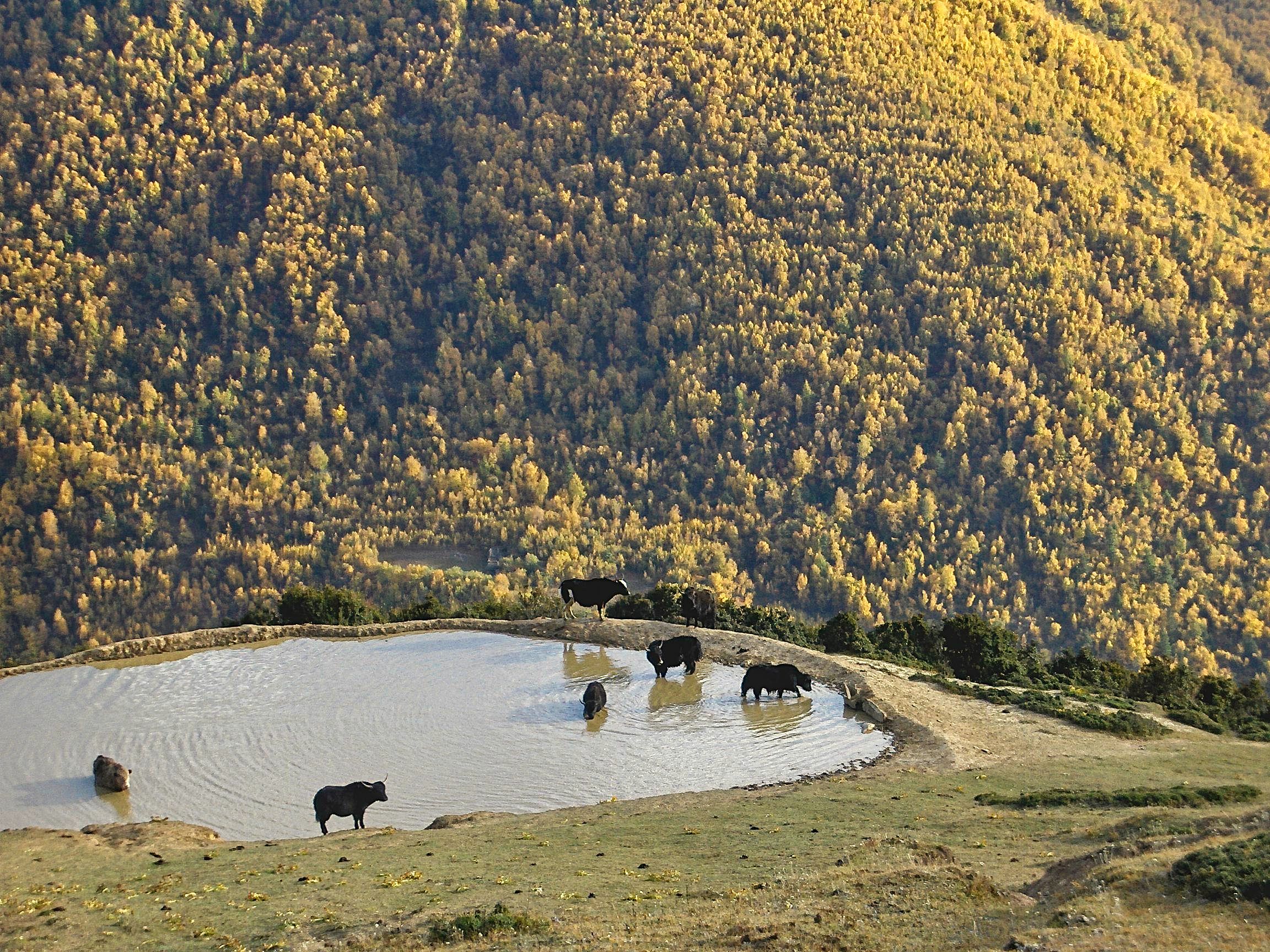
The view at the top was not bad, but I thought the most interesting thing was the pool for cows to bathe in, with the larches in the background:
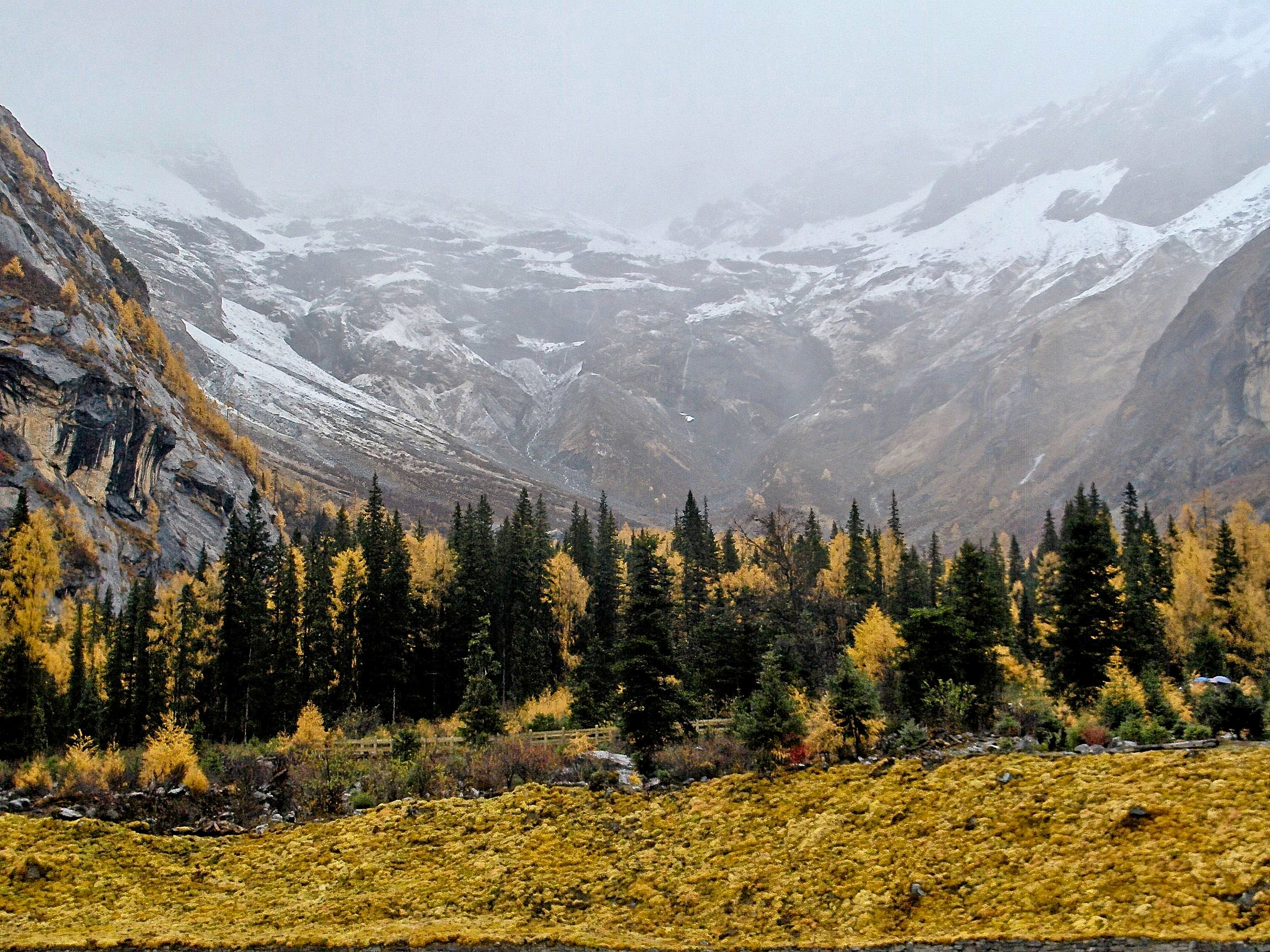
On the first full day, I went into the Shuangqiao Valley. This is the “full service” valley, with a bus that runs its length (much like in Jiuzhaigou). As well, there are a couple of boardwalks that allow you to walk between shuttle stops.
Unfortunately, it was overcast and rainy for the entire day, so I could see any of the mountain peaks, and it was a dreary day overall.
On one of the boardwalks, I ran into an old Chinese man who, for some reason, spoke Esperanto (the “universal language” spoken by no one). He seemed to want to converse in Esperanto. I guess he could hook up with William Shatner and they could talk.
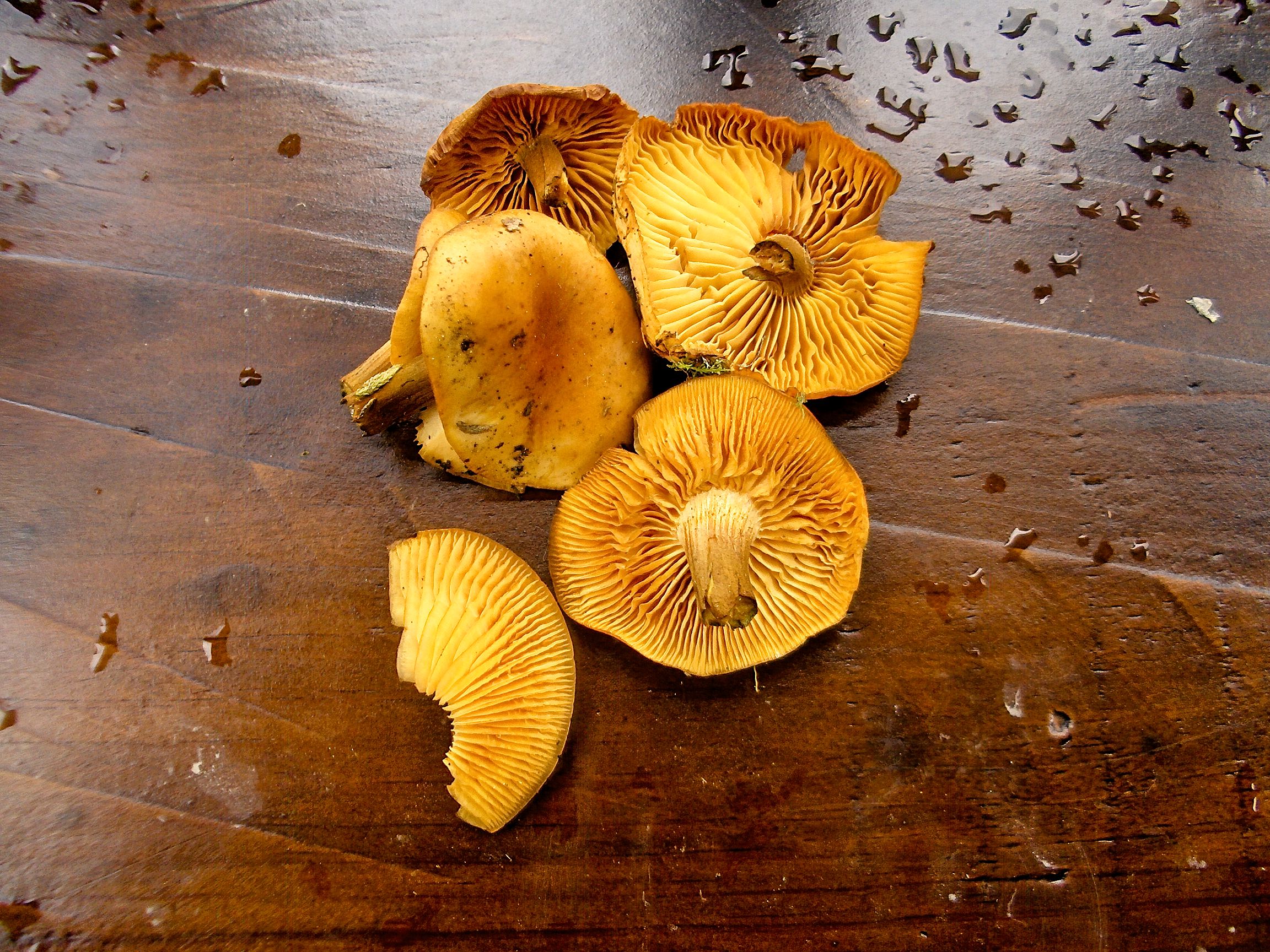
The other thing the old man had done was pick mushrooms, which he left on the bench. Of course, the valleys are considered a national park, so no one should be picking anything.
Later on, on the second boardwalk, I encountered some students from Leshan who were going the same way. After they had all taken pictures of each other standing with the tall laowei, we strolled along and talked. It was getting near “closing time” for the park, so we all took the same shuttle out of the park. One of the students bought some apples from a vendor outside the park, and offered one to me. That would prove to be my downfall, the next day.
I did rub the apple clean, but I should have washed it with bottled water, or, better yet, peeled it.
(Of course, another explanation for my upcoming gastric distress may be that I was eating at “Mountain Germ King’s Girlie Restaurant”. Perhaps if you are a “girlie man”, the Mountain Germ King will infect you.)

I had arranged the next day to go into the second valley: Changping. This valley has a road that leads to a boardwalk, and a taxi took me there. The boardwalk lasts three or four kilometres, and then you have to hike in the horse track. A horse track does not make for an easy hiking track. Horses churn up the trail, while hikers pack it.
I took an Immodium, and set out. However, it took me 10 hours to hike in eight or nine km, and out again. I probably spent 5 hours resting, and even slept for 1/2 hour.
When I got to a point where I could see this interesting pointy mountain, I decided it was time to turn back.

I had planned to hike the third – and supposedly best – valley on the third day. However, it is also the most difficult hike: a horse track all of the way, and the starting point is much lower. I decided to bail out on this hike, and find something easier to do.
The taxi driver (the taxis in Rilong are actually microvans, with no meter) suggested going to Jiajingshan, which is another mountain and valley that is a reasonably short drive away. He showed my a brochure with some nice photos, and I figured, “it looks nice, and driving there is easy.”
Off we go! The first thing the driver does is stop at a small orchard, sneak in, and steal a bunch of apples. By now, however, my system had been hit with whatever was on the apples, so it was okay to eat them. (I did wash the ones I ate, though.)
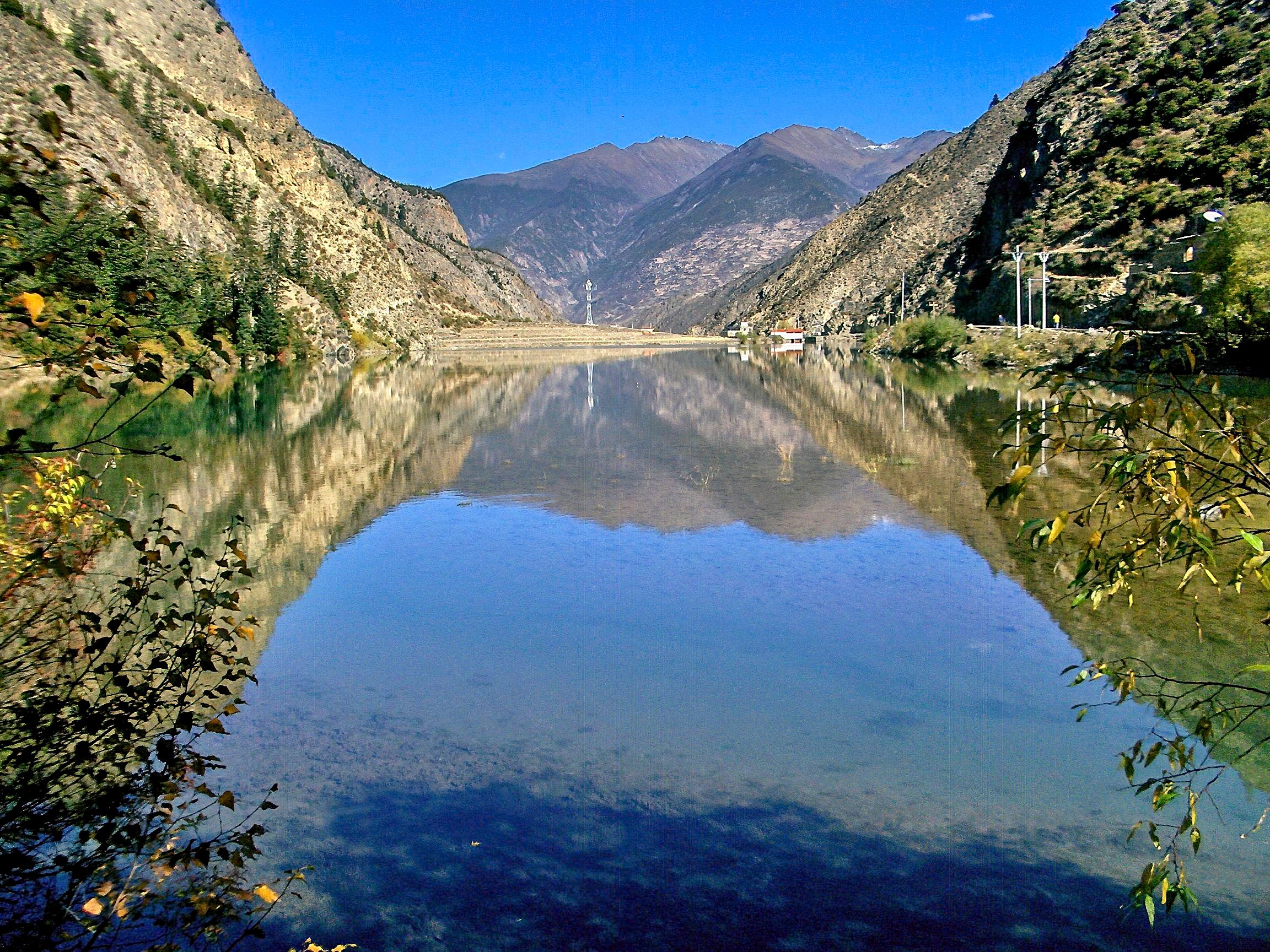
After a while, we stop at a small lake. The driver indicates that I should hike around it. “Okay, this is a slightly interesting little side trip, I guess.”
We drive a short way further, and stop again. This time, there are some stone huts at the start of a valley. The driver communicates, “what time will you be finished?”, and I figure, “this might be worth 1/2 hour, and then on to the good stuff.”
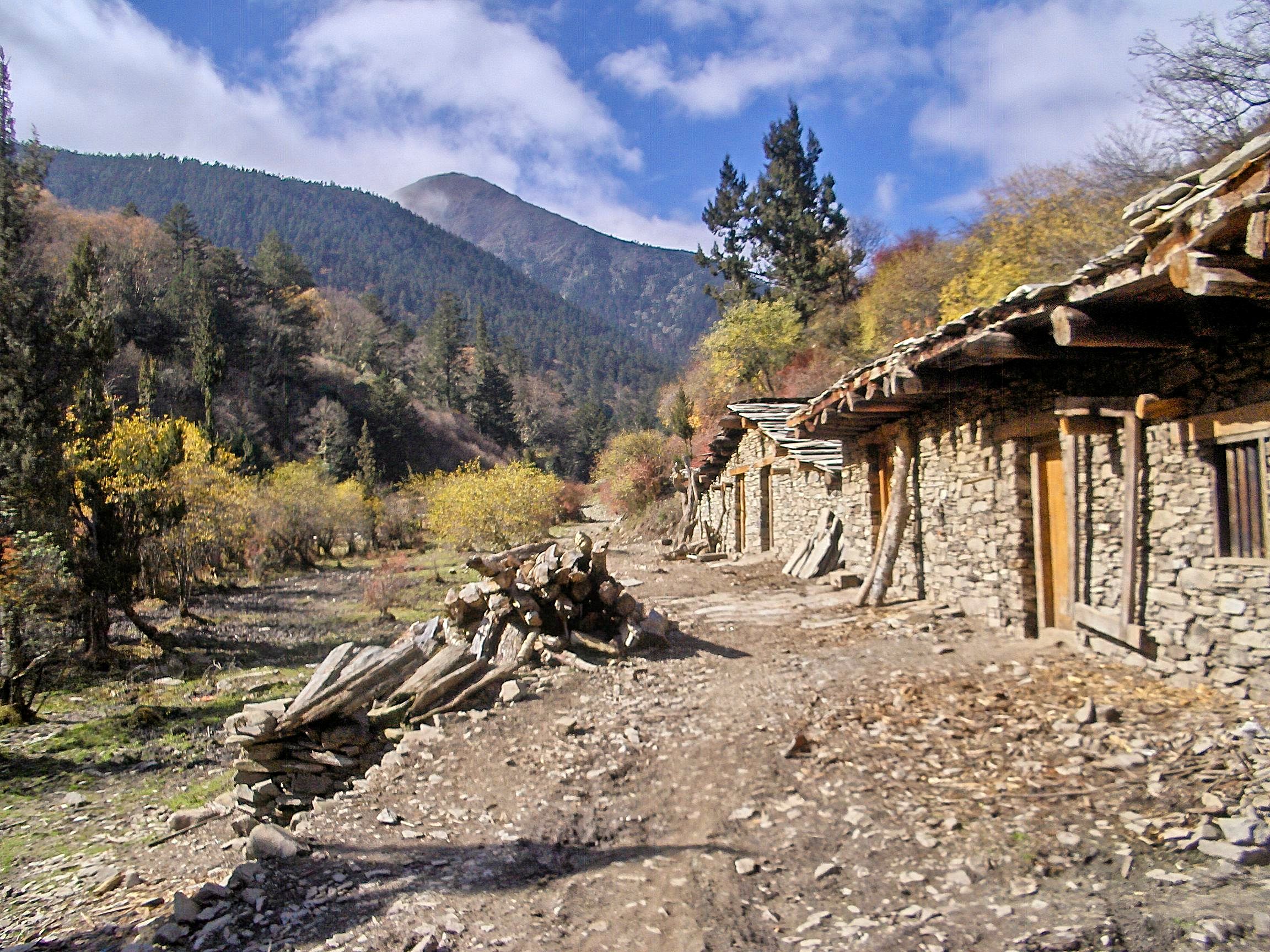
When I return, I indicate, “let’s go”, and the response is, “go where?”
I pull out the brochure and point at the photos. It is then that I learn that the puny lake is the lake that looks fairly nice in the brochure, and the Jiajing mountain and valley are a two hour hike from the stone huts.
So, there was a serious communication problem! I had researched the three valleys, but I knew nothing about Jiajing, except for the photos in the brochure.
Now, I had to decide, “do I want to hike into the valley, or do something else.” I was still not feeling 100% from the day before, so I indicated that we could continue driving up the road, to the 4110m Baoxing pass. (Also, as you can see, it was overcast over the valley and mountain, anyway.)
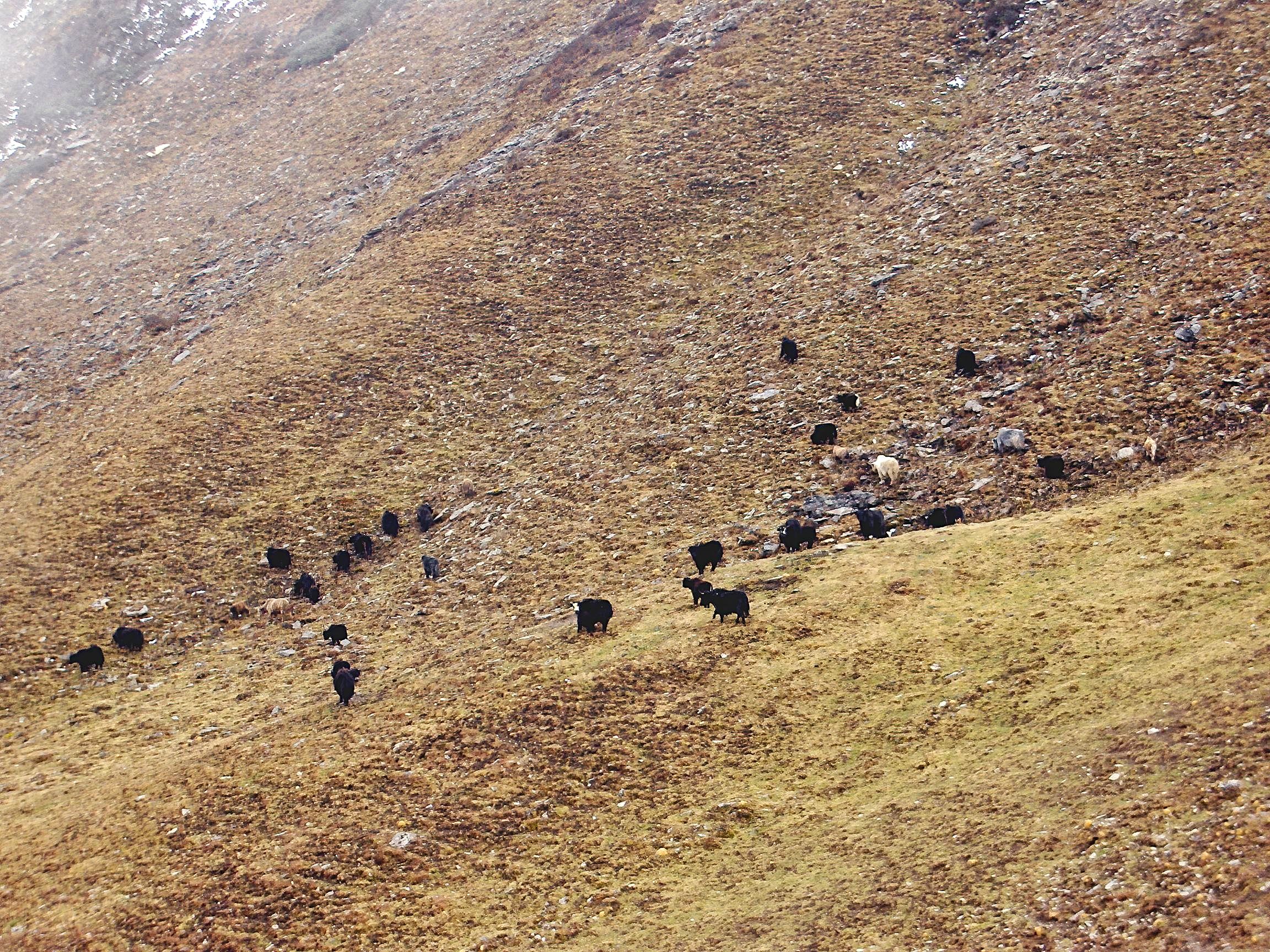
At the top of the pass, I saw some more of the many specially-trained high-altitude “mountain cows” which graze on the steep grasslands at over 4000m.
In the end, I consider my 3.5 days around Siguniang Mountain to be more of a “reconnaissance mission” than a truly successful outing. I learned a lot about the area. What you really want to do here is a couple of 2-4 day backpack camping trips into the two undeveloped valleys. And September is a better time than late October, too, I would think. (On my arrival in Chengdu, I met two Kiwis who had tried to hike across a pass between two of the valleys, and gave up due to bad conditions.)
 Michael Chmilar's Travels
You must be logged in to post a comment.